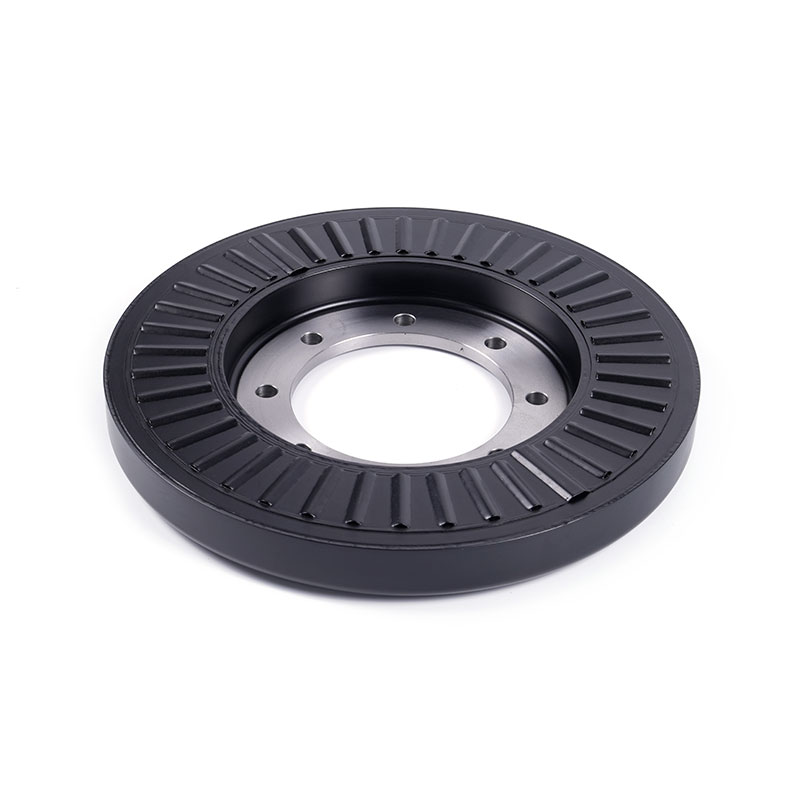
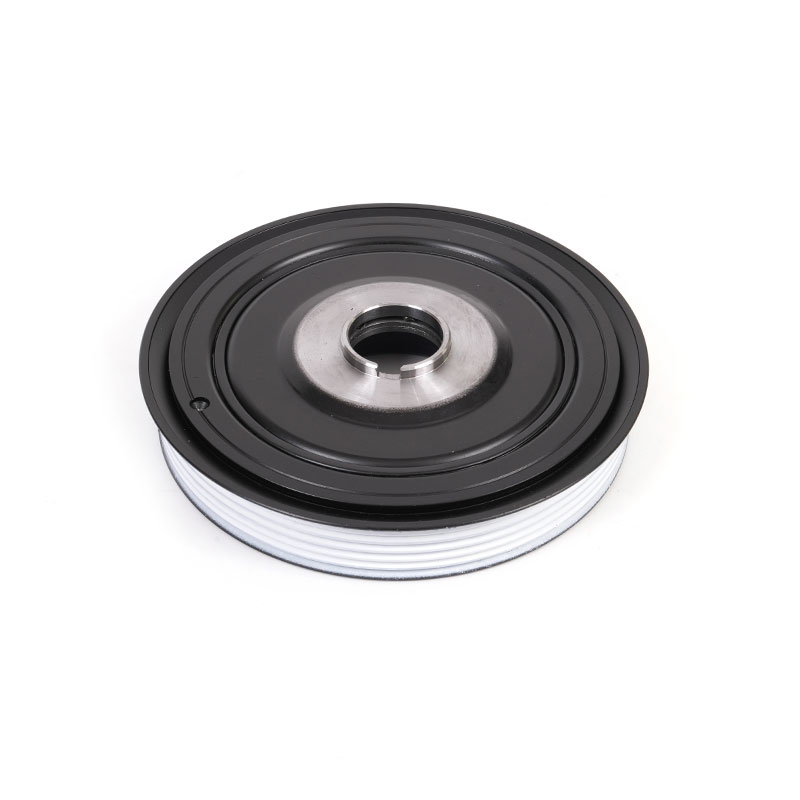
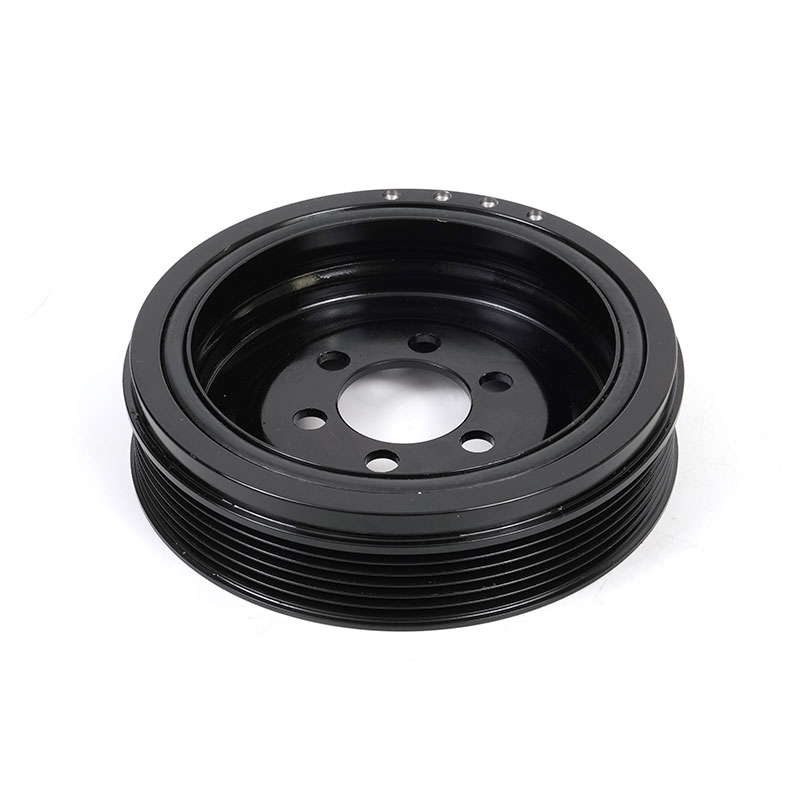
For service technicians and fleet mechanics, a fluid damper (일명 viscous damper or 크랭크샤프트 진동 댐퍼) is one of the most overlooked yet critical components on any diesel engine. Unlike a solid crank pulley harmonic balancer, a fluid viscous damper uses silicone fluid to absorb torsional twist. When it fails, the results are catastrophic: broken crankshafts, destroyed bearings, and an engine that stops without warning. This guide helps you identify, replace, and source the right 엔진 진동 댐퍼 for heavy‑duty trucks, generators, and industrial equipment.
Industry data recommends replacing heavy‑duty fluid viscous dampers at 500,000 miles or 15,000 operating hours. Failure to replace leads to silicone fluid hardening, loss of damping, and crankshaft fatigue failure costing over $25,000 in repairs and downtime. Visible signs of failure include fluid leaks, housing wobble, and increased front‑end vibration.
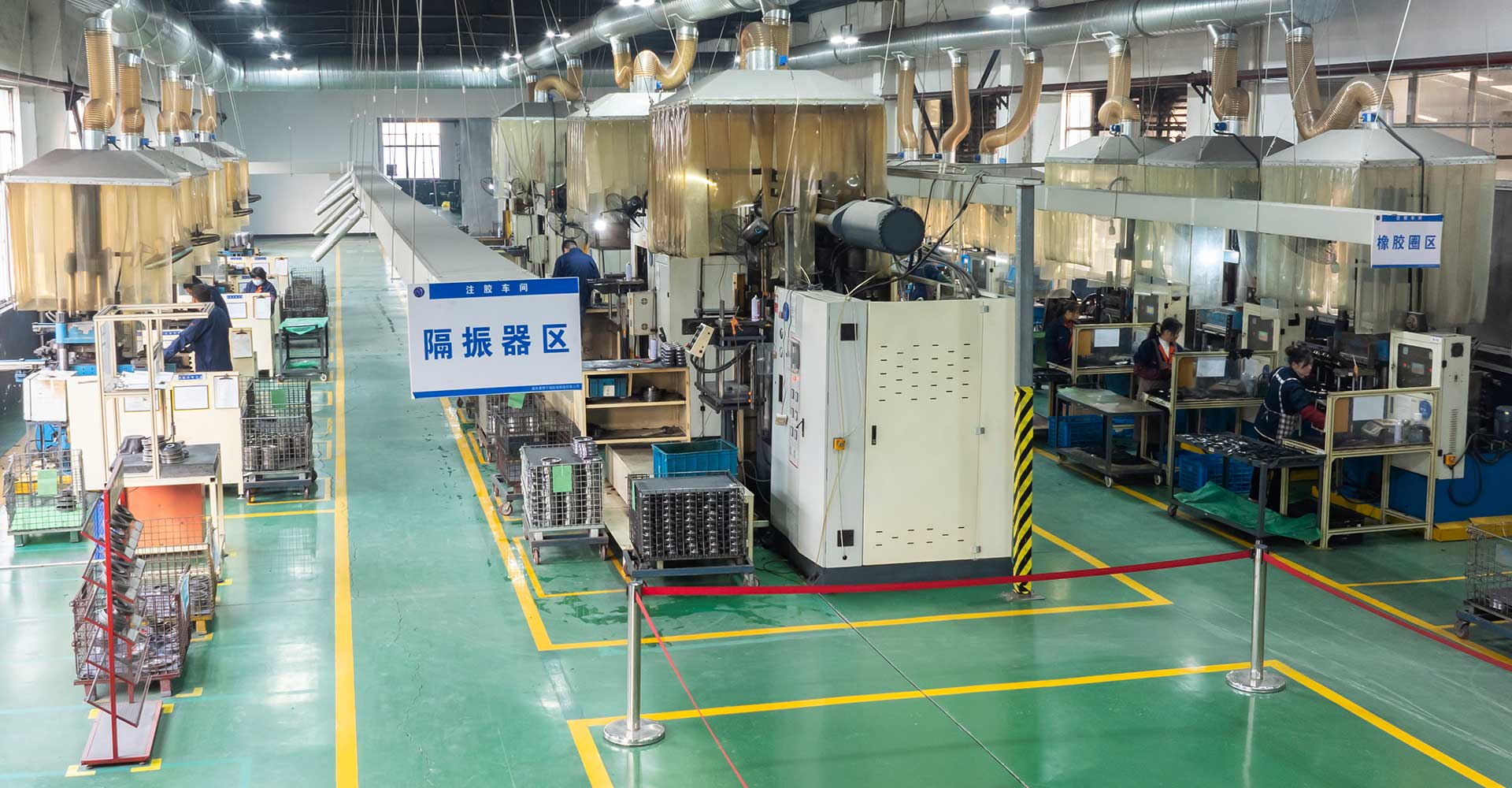
Auramaia is a China‑based 제조업체 그리고 공급업체 of aftermarket fluid dampers for Cummins, Detroit, Caterpillar, PACCAR, and other major engine brands. We offer 도매업체 programs, 사용자 지정 가능 private labelling, and full OEM/ODM capabilities, all from our IATF 16949‑certified factory.
When to Replace a Fluid Viscous Damper: The 500,000‑Mile Rule
Leading damper manufacturers such as Vibratech TVD recommend replacement at 500,000 miles or 15,000 hours for over‑the‑road Class 8 trucks. This is not a suggestion—it is an engineering necessity. The silicone fluid inside a viscous damper gradually hardens after prolonged heat exposure. Once hardened, the inertia ring can no longer shear freely, and damping effectiveness drops sharply. Engines rebuilt without replacing the damper suffer greatly reduced life expectancy and face a high risk of crankshaft failure. For stationary engines and generator sets, Vibratech TVD’s guideline is 25,000 operating hours.
Deep Dive: The Silicone Hardening Mechanism
The silicone fluid in a viscous damper is a long‑chain polymer that relies on molecular slippage to convert kinetic energy into heat. After hundreds of millions of shear cycles and thousands of hours at elevated temperatures (typically 90‑120°C), the polymer chains begin to cross‑link—a process called polymerization. The fluid becomes thicker, eventually turning into a gel‑like paste. When this happens, the inertia ring moves in near‑lockstep with the housing, and the damper becomes little more than a heavy, useless lump of metal. The danger is that this process produces no visible external signs. The damper may look perfect but offer zero protection. That is why time‑ or mileage‑based replacement is essential, regardless of appearance. Auramaia uses advanced silicone formulations with enhanced thermal stabilisers to extend service life, but we still recommend following OEM intervals.
Seven Signs Your Fluid Damper Is Failing
- Visible fluid leakage. Any wetness around the housing seam or inertia ring indicates seal failure. Replace immediately.
- Housing wobble. If the damper does not spin true, the inertia ring may be loose or the housing distorted.
- Increased front‑end vibration. A failing damper allows more torsional twist, which you can feel through the cab or chassis.
- Belt noise or wear. Misalignment from a distorted housing throws belts and wears pulleys unevenly.
- Accessory drive gear wear. The timing gears and front accessory drive are the first to suffer when damping is lost.
- Loss of fuel economy. A degraded damper increases timing scatter, which reduces combustion efficiency.
- Over‑temperature housing. After a full‑load run, the damper surface should not be significantly hotter than the engine block.
Why Correct Fitment Matters: Cross‑Reference Essentials
Using the wrong damper is as bad as using a failed one. An incorrect inertia value shifts the critical speed into the operating range, amplifying vibration instead of controlling it. Professional aftermarket sellers rely on accurate cross‑reference data. For example, a Cummins 4919864 damper must be matched to the specific engine family and horsepower rating. Auramaia provides a comprehensive cross‑reference guide covering thousands of OEM numbers, with dimensional verification to ensure correct fitment.
Installation Tips for Service Professionals
- Always use new mounting bolts. Damper bolts are torque‑to‑yield in most modern engines—single use only.
- Clean the crankshaft nose thoroughly. Any debris or corrosion affects seating and balance.
- Check crankshaft runout. Before installing the new damper, measure the crankshaft snout runout. Anything above 0.002″ requires correction.
- Torque to specification. Follow the engine manufacturer’s torque sequence and value. Under‑torquing allows loosening; over‑torquing distorts the hub.
- Replace the front crank seal. With the damper removed, replacing the seal adds minimal labour and prevents future leaks.
FAQ: Fluid Damper Replacement and Aftermarket
Can I replace a rubber elastomer damper with a fluid viscous damper?
Yes, provided the mounting interface and inertia value match. Fluid viscous dampers offer broadband control and longer service life, making them a superior choice for heavy‑duty applications. However, always verify with your supplier that the fluid damper is approved for your specific engine model, as the damping characteristics differ from rubber.
How do I cross‑reference an OEM part number to a replacement?
Provide your supplier with the OEM number (e.g., Cummins 4955112, Caterpillar 7C‑7323, Detroit 23514917) and engine serial number. A qualified supplier will cross‑reference to the correct aftermarket part and provide dimensional verification if needed.
What is the warranty on aftermarket fluid dampers?
Auramaia offers a 24‑month warranty on all fluid viscous dampers against manufacturing defects. Extended warranty programs are available for wholesale and fleet accounts.
Do you offer private‑label dampers for my distribution brand?
Yes. As a 제조업체 로써 OEM/ODM capabilities, we produce private‑label fluid dampers with your branding, custom packaging, and application‑specific cataloguing. Minimum order quantities apply.
What is the shelf life of a fluid damper before installation?
Properly stored in a dry, climate‑controlled environment (15‑25°C, humidity below 60%), silicone fluid does not degrade. However, elastomer seals may dry out over extended storage. We recommend rotating stock annually and installing within 5 years of manufacture.
Sources: Vibratech TVD – When to Replace a Viscous Crankshaft Damper; Protect Your Engine: It’s a Heavy Duty World Out There! (Vibratech TVD blog, 2025); FinditParts cross‑reference data.
 한국어
한국어  English
  简体中文
简体中文  Español
  Français
  Deutsch
  العربية
  Русский
  Português
  Tiếng Việt
  Italiano
  Maithili
  ไทย
ไทย  Türkçe