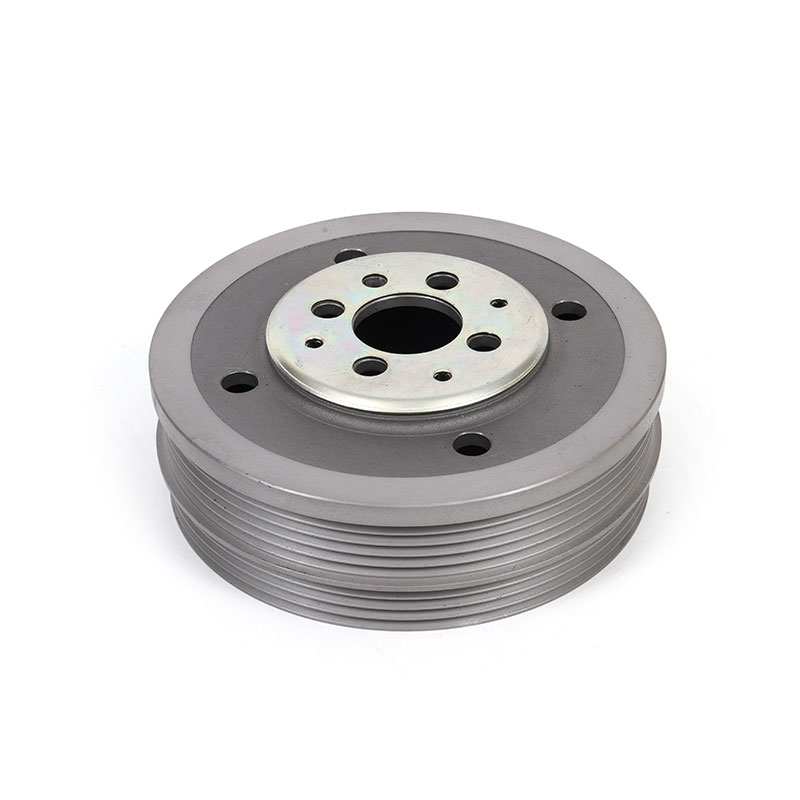
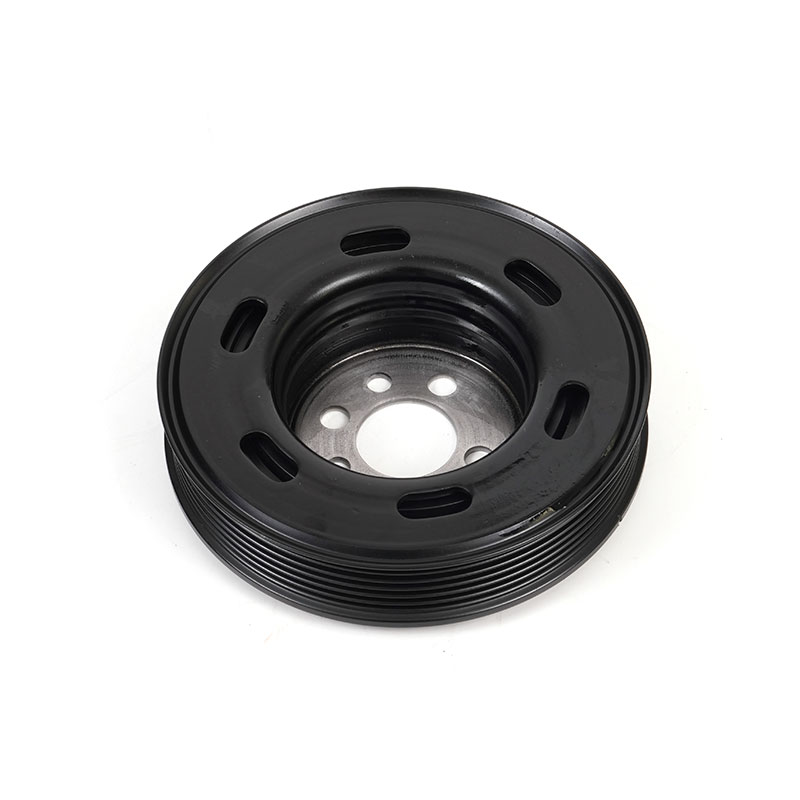
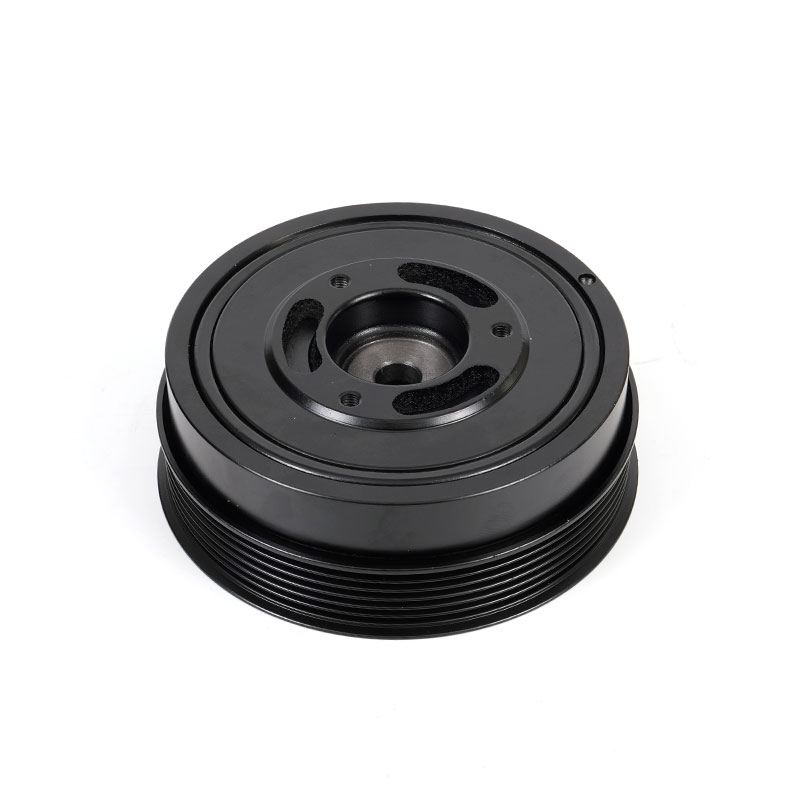
For procurement managers and distributors, finding a reliable Flüssigkeitsdämpfer supplier isn’t just about price. It’s about consistency, traceability, and knowing that every unit leaving the factory meets the same strict tolerances. Whether you call it a Viskositätsdämpfer, bietet ein viskoser Flüssigkeitsdämpfer, bietet ein Harmonische Dämpferscheibe, bietet ein Kurbelwellen-Riemenscheiben-Harmonienabstimmer, or an Motorkurbelwellen-Schwingungsdämpfer, the core requirement is the same: it must protect the crankshaft across all RPMs, in all seasons, for hundreds of thousands of miles.
The global fluid viscous damper market was valued at US$21.8 billion in 2024 and is projected to reach US$26.6 billion by 2030, growing at 3.4% CAGR. Asia Pacific holds the largest share, driven by China’s automotive production capacity. For B2B buyers, sourcing from an IATF 16949‑certified Chinese manufacturer offers the best combination of quality, price, and scalability.
Auramaia ist ein in China ansässiger Hersteller und Anbieter of fluid viscous dampers for heavy‑duty trucks, marine engines, generators, and industrial equipment. We operate a vertically integrated factory with in‑house casting, CNC machining, silicone filling, and dynamic balancing. We support Großhändler -Programme, Anpassbar designs, and full OEM/ODM services, all under IATF 16949 certification.
Why B2B Buyers Are Turning to Chinese Manufacturers
According to the Global Fluid Viscous Dampers Strategic Business Report (March 2026), the market is expanding due to stricter emission regulations and the need for longer engine durability. Asia Pacific dominates, largely because China produces about 32% of the world’s vehicles. For international buyers, this means shorter supply chains, competitive pricing, and access to manufacturers who have invested heavily in automation and quality systems. Auramaia is part of this new generation of Chinese suppliers that combine industrial‑scale production with IATF 16949 discipline and full export compliance.
Deep Dive: The Real Cost of a Bad Supplier
When a fluid viscous damper fails in the field, the consequences cascade. A fleet operator who installed a cheap, uncertified damper may first notice belt squeal, then gear train rattle, then a broken crankshaft. The repair bill: US$15,000‑25,000. The hidden cost: weeks of lost revenue, damaged customer relationships, and a procurement manager facing hard questions. For a distributor, a single batch of out‑of‑spec dampers can trigger chargebacks, returns, and lost accounts. That is why professional B2B buyers now audit not just the product, but the factory’s entire quality ecosystem: material traceability, in‑process SPC, and real‑time test data. Auramaia’s IATF 16949 system ensures every damper is tracked from raw steel to final balance, giving our wholesale partners documented confidence.
How to Vet a Fluid Damper Manufacturer: A Practical Checklist
- Certifications first. IATF 16949 is non‑negotiable for automotive and heavy‑duty applications. ISO 9001 alone is not enough.
- Vertical integration matters. A factory that casts, machines, fills, and tests under one roof controls quality. Assemblers who buy parts from multiple sources cannot offer the same traceability.
- Ask for test data. A real manufacturer provides dynamic balance reports, torsional fatigue results (10 million cycles minimum), and thermal chamber validation (-40°C to +150°C).
- Check cross‑reference accuracy. Does the supplier maintain a database for Cummins, Detroit, Caterpillar, and PACCAR part numbers? Wrong fitments cause costly returns.
- Visit the factory. If not in person, request a virtual tour. Look for clean filling areas, calibrated balancing machines, and documented SPC charts.
Fluid Damper Cross‑Reference: Why It Matters for Wholesale
Cross‑referencing is the backbone of aftermarket distribution. A distributor who cannot quickly map an OEM number to the correct replacement will lose the sale to a competitor. Professional aftermarket platforms such as FinditParts maintain extensive cross‑reference lists for major engine families, including Cummins (e.g., 4919864) and Detroit Diesel. Auramaia provides a proprietary cross‑reference database and a digital API that wholesalers can integrate into their own catalogs, reducing returns and improving customer trust.
FAQ: B2B Sourcing and Wholesale
What is the typical MOQ for wholesale fluid dampers?
For standard part numbers, MOQ is 10 units (mix‑and‑match allowed). For Anpassbar OEM/ODM projects with private labeling, MOQ typically starts at 50 units per design. Higher volumes receive tiered pricing discounts.
How do I verify a Chinese manufacturer’s IATF 16949 certification?
Request a copy of the certificate and check that the scope explicitly includes vibration damper manufacturing. You can also verify the certificate against the IATF database if the supplier provides the registration number.
What is the typical lead time for a wholesale order?
For stocked part numbers, 15‑30 days. For custom OEM/ODM orders, 45‑60 days after design approval and sample validation. Auramaia also offers vendor‑managed inventory (VMI) for high‑volume wholesale partners.
Can I get samples before placing a bulk order?
Yes. We provide sample units for evaluation. Sample cost is typically deducted from the first bulk order. Lead time for samples is 15‑30 days depending on complexity.
Do you offer private labelling for distributors?
Absolutely. As a Hersteller with full production control, we can print your brand, part number, and installation specifications on the damper housing. We also offer custom packaging and application‑specific catalogues.
Sources: Fluid Viscous Dampers – Global Strategic Business Report (Research and Markets, March 2026); FinditParts cross‑reference data; IATF 16949:2016 standards.
 Deutsch
  English
  简体中文
简体中文  Español
  Français
  العربية
  한국어
한국어  Русский
  Português
  Tiếng Việt
  Italiano
  Maithili
  ไทย
ไทย  Türkçe