
对于工程师和技术采购人员来说,在 fluid damper 和橡胶弹性体减振器之间的选择不仅关乎成本——更关乎物理原理。 viscous damper (also called a fluid viscous damper 或 发动机曲轴减振器)利用硅油在所有转速范围内提供宽频扭振控制。相比之下,橡胶 harmonic damper pulley 或 crank pulley harmonic balancer 仅针对单一频率调谐,且会随热量衰减。本技术指南阐述了粘性阻尼背后的工程原理,并解释为何其为重型、船舶及高性能应用领域的更优选择。.
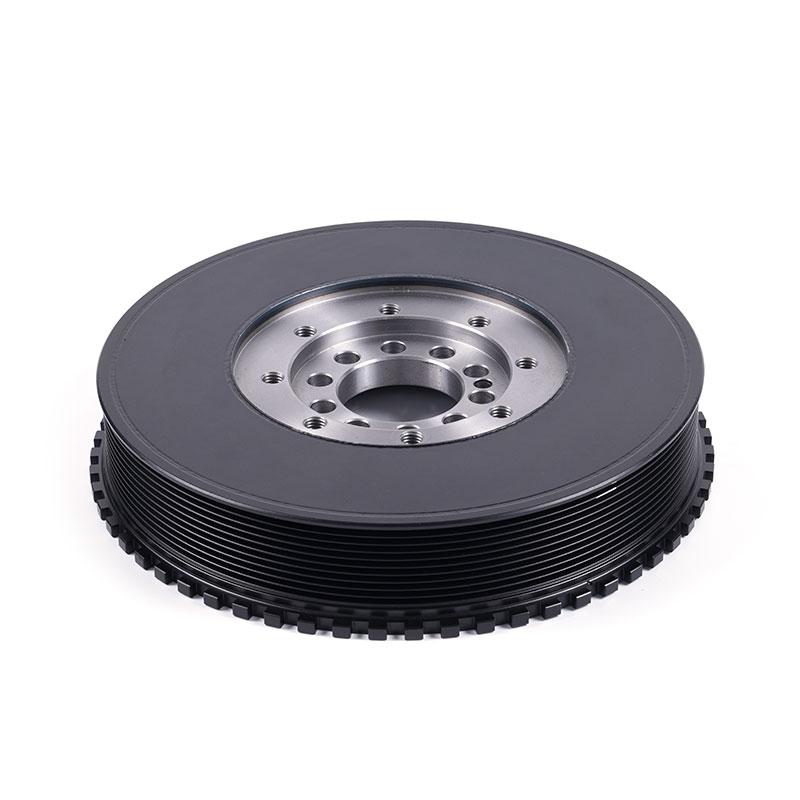
流体粘性减振器采用悬浮在高粘度硅油中的自由惯性环。当曲轴因气缸点火发生扭转时,惯性环在流体中剪切运动,将扭转动能转化为低品位热能。这实现了全阶次发动机的自调谐宽频阻尼,而橡胶减振器仅在单一调谐频率有效且在高温下会快速衰减。.
Auramaia is a China‑based 制造商 和 供应商 为OEM、售后市场和工业客户提供的流体粘性减振器。我们的 可定制 OEM/ODM 工程团队运用Holzer计算和有限元分析来优化每种发动机应用的阻尼性能,并通过内部2000万次循环的扭转疲劳测试提供支持。.
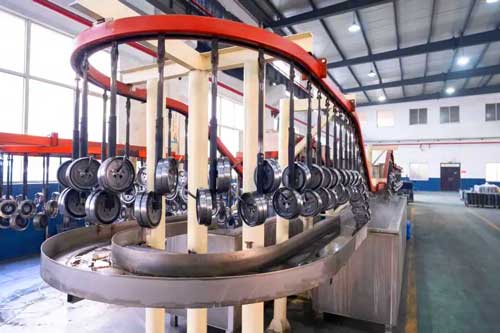
扭转振动与阻尼的物理原理
所有内燃机都会产生扭转振动——即由点火顺序引起的曲轴端到端扭转回弹现象。在共振转速下,这种扭转振幅可增大10至50倍,迅速超过曲轴的疲劳耐久极限。曲轴减振器通过增加系统质量和阻尼来改变固有频率并吸收能量。正如Vibratech TVD所述,不受控的扭转振动在负载和功率提升时会更加剧烈,使得有效阻尼对发动机寿命至关重要。.
深度解析:硅油剪切流体动力学
粘性减振器中的硅油呈现非牛顿流体剪切稀化特性。在峰值扭转冲击产生的高剪切速率下,流体表观粘度轻微下降,降低寄生阻力并使惯性环快速响应。在稳态工况下粘度恢复正常,保持稳定阻尼。这种自调谐机制遵循幂律模型:τ = K·γⁿ(其中τ为剪切应力,γ为剪切速率,n为流动指数,剪切稀化时n<1)。硅油型粘性减振器的可靠运行完全依赖于硅油通过剪切流吸收扭转振动能量的能力。2023年《波兰海事研究》期刊发布的论文证实,油液的非牛顿特性是实现有效宽频阻尼的关键。相比之下,橡胶弹性体减振器属于调谐质量吸振器:橡胶环作为连接轮毂与惯性环的弹簧,仅在单一频率提供最大阻尼。在其他所有转速下,其效能会急剧下降。此外,橡胶会因热硬化,永久改变其刚度并使调谐频率偏离目标值。.
流体粘性与弹性体减振器直接对比
| 特征 | Fluid Viscous Damper | 弹性体(橡胶)阻尼器 |
|---|---|---|
| 阻尼带宽 | 宽频(全转速有效) | 窄频(单一频率调谐) |
| 工作温度范围 | -40°C 至 +150°C | -20°C至+100°C(合成油最高110°C) |
| 使用寿命(重型工况) | 50万英里/1.5万小时 | 80,000-150,000英里 |
| 失效模式 | Gradual fluid polymerisation (invisible) | Visible rubber cracking, de‑bonding, hardening |
| Effect on modified engines | Self‑tuning; adapts to changes | Requires re‑tuning; mismatched if engine modified |
Why Broadband Damping Matters in Real‑World Operation
A rubber damper works well at the specific engine order for which it was tuned—for example, the 4th order of a four‑cylinder diesel at cruising RPM. But when the engine accelerates, decelerates, or idles, the damper is operating outside its optimal range. This is why many fleets experience front‑end gear noise at idle even with a new rubber damper. A fluid viscous damper, in contrast, controls all frequencies simultaneously. As Fluidampr’s Ivan Snyder explains, “A viscous damper is able to control all frequencies throughout the entire RPM range.” This means quieter idling, smoother acceleration, and consistent protection regardless of load or speed.
The Thermal Advantage of Fluid Damping
Heat is the enemy of rubber. Under sustained full load—such as a truck climbing a mountain pass or a generator running at prime power—the rubber element in an elastomer damper can exceed 100°C, accelerating hardening and cracking. Silicone fluid, however, remains stable up to 150°C. The fluid also conducts heat away from the inertia ring and into the housing, where it is dissipated by air flow. This thermal stability is why marine and generator applications almost exclusively specify fluid viscous dampers.
FAQ: Technical Engineering
Can a fluid viscous damper be repaired or rebuilt?
Yes, some large‑frame industrial dampers feature a bolt‑on cover for fluid sampling and replacement. Standard heavy‑duty truck dampers are sealed units designed for replacement rather than repair. Auramaia offers rebuild services for select industrial models.
How does cold starting affect fluid viscous dampers?
Silicone fluid maintains consistent viscosity down to -40°C, providing immediate damping upon cold start. Unlike rubber dampers, which become stiff and brittle in freezing conditions, fluid dampers require no warm‑up period to protect the crankshaft.
What is the shelf life of a fluid damper before installation?
Properly stored in a dry, climate‑controlled environment, silicone fluid does not degrade. However, elastomer seals may dry out over extended storage. We recommend rotating stock annually and installing within 5 years of manufacture.
How do you calculate the correct inertia for a custom engine?
Our engineers use the Holzer method, which models the crankshaft as a multi‑mass elastic system. The target inertia ratio (damper inertia ÷ crankshaft system inertia) typically falls between 0.6 and 1.2 for optimal control. We then validate the design with FEA and torsional fatigue testing.
What testing standards do you follow?
We comply with SAE J2481 for torsional fatigue testing (10‑20 million cycles), ISO 1940‑1 for dynamic balancing (G6.3 or G2.5), and IATF 16949 for quality management. Every production damper is 100% leak‑tested and spin‑balanced.
Sources: Polish Maritime Research (2023); Fluidampr PRI Show 2016; Vibratech TVD technical publications; SAE J2481 test standards.
 简体中文
简体中文  English
  Español
  Français
  Deutsch
  العربية
  한국어
한국어  Русский
  Português
  Tiếng Việt
  Italiano
  Maithili
  ไทย
ไทย  Türkçe