
Torsional vibration is a critical challenge in engine design, especially for heavy-duty diesel engines, marine propulsion systems, and power generators. If left uncontrolled, it can lead to premature wear, noise, and even catastrophic failure of engine components. This is where torsional vibration dampers come into play—and two of the most common types are Viscous Dampers and Rubber Dampers.
But which one is right for your application? Let’s break it down.
How Rubber Dampers Work
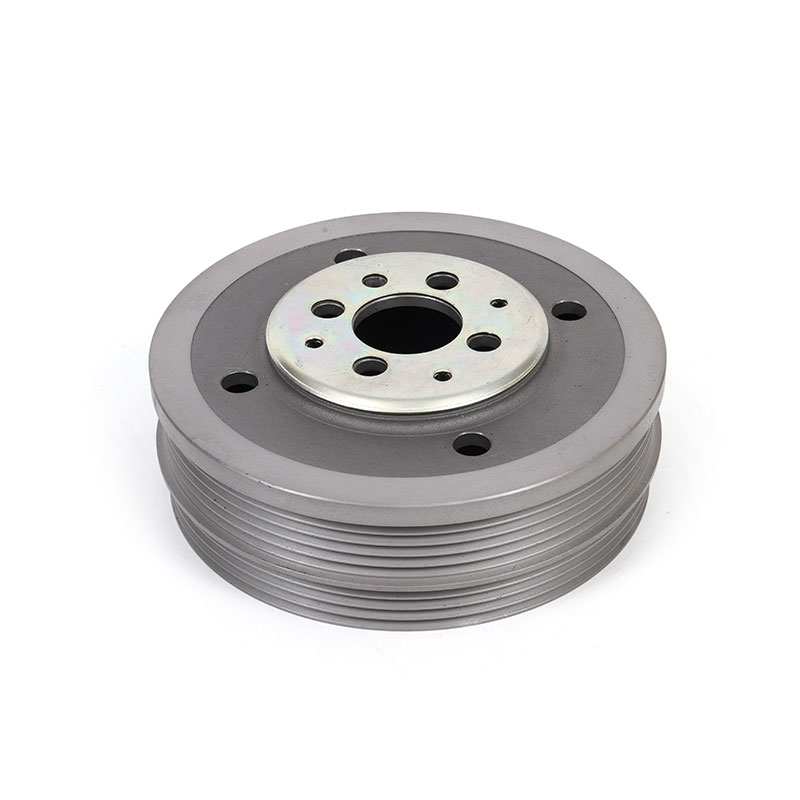
Rubber dampers operate on the principle of elastic hysteresis. A rubber element is bonded between the inertia ring and the hub. When torsional vibration occurs, the rubber deforms, converting vibration energy into heat.
- Advantages: Cost-effective, simple design, no sealing required, suitable for moderate vibration conditions.
- Limitations: Performance highly sensitive to temperature, prone to aging over time, less effective under high-torque or high-RPM conditions.
How Viscous Dampers Work
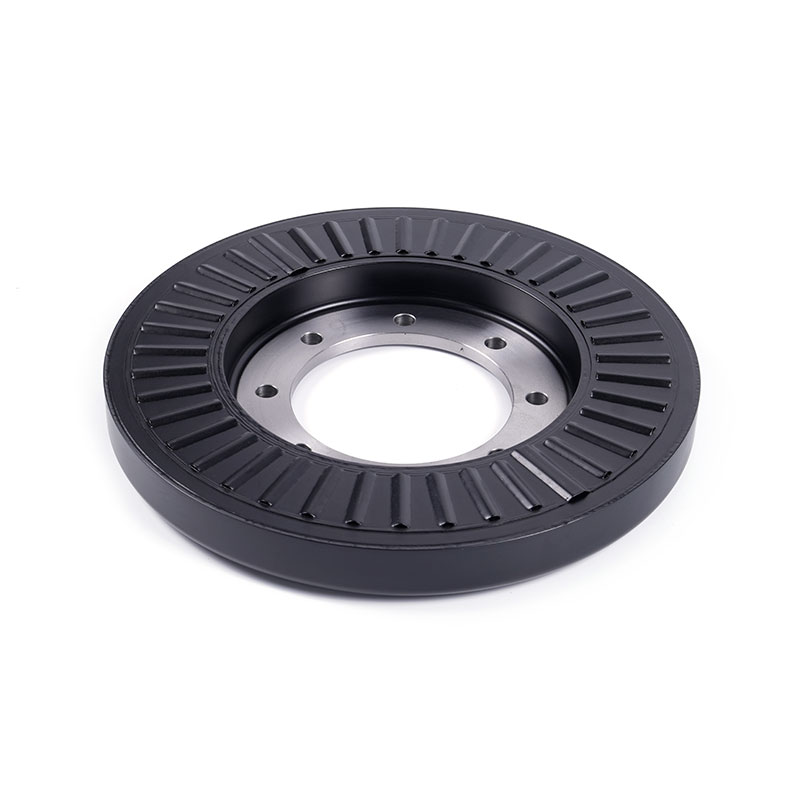
Viscous dampers, like our 6M5RF model, use silicone oil as the damping medium. A sealed chamber contains a high-viscosity fluid and an inertia ring. Shear forces in the fluid dissipate vibration energy as heat.
- Advantages: Stable damping across a wide temperature range (-40°C to +150°C), long service life, ideal for high-power and high-speed engines.
- Limitations: More complex design, requires perfect sealing, generally higher initial cost.
Comparison at a Glance
| Feature | Rubber Damper | Viscous Damper |
|---|---|---|
| Damping Medium | Rubber | Silicone Oil |
| Temperature Sensitivity | High | Low |
| Lifespan | Moderate | Long (15,000+ hours) |
| Cost | Lower | Higher |
| Best For | Passenger cars, light-duty engines | Heavy-duty trucks, marine, generators |
Which One Should You Choose?
-
For light-to-medium duty gasoline/diesel engines with stable operating temperatures, a rubber damper may suffice.
-
For heavy-duty, high-torque, or variable-speed applications (e.g., commercial vehicles, ships, compressors), a viscous damper is often the superior choice due to its consistent performance and durability.
Why Partner with a Specialist Manufacturer?
At our facility, we design and produce both rubber and viscous dampers under one roof. This allows us to provide unbiased recommendations based on your engine specs—not just what we sell. Our vertical integration—from casting and machining to sealing and testing—ensures that every viscous damper, like the 6M5RF, delivers leak-proof performance and long-term reliability.

 English
  简体中文
简体中文  Español
  Français
  Deutsch