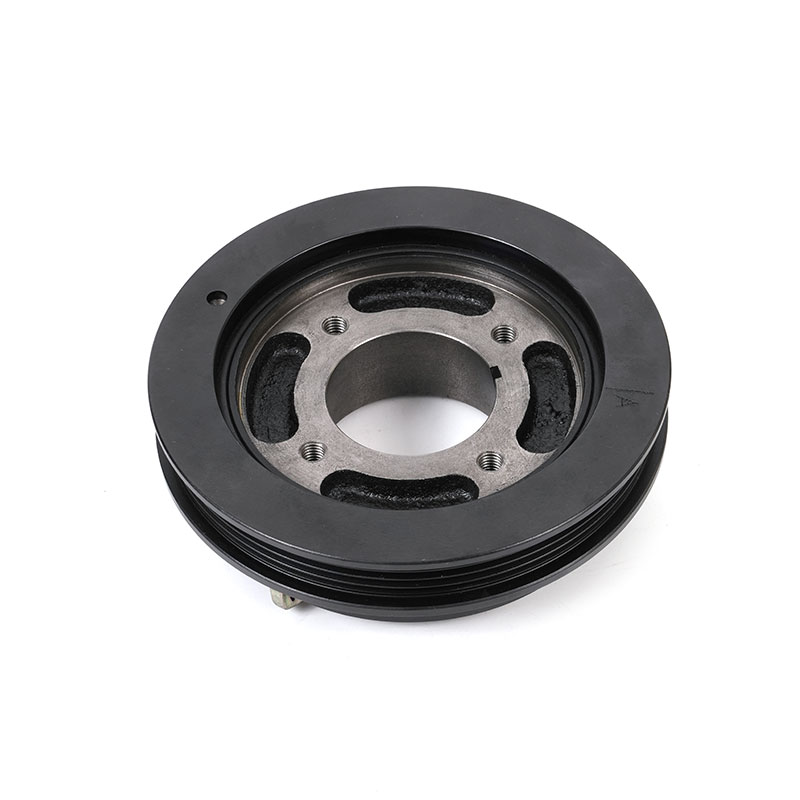
When engine builders push RPM limits past 7,000 or boost pressures above 40 psi, a standard rubber harmonic damper pulley cannot keep up. The extreme torsional spikes and heat will destroy elastomer dampers within hours. That is where a fluid damper hoặc viscous damper excels. Motorsport engineers rely on fluid viscous damper technology to protect billet crankshafts in drag racing, drifting, and endurance racing. This article explores why Auramaia’s crank pulley harmonic balancer và bộ giảm chấn rung trục khuỷu động cơ are trusted by tuners worldwide.
High‑performance engines with lightweight flywheels and forged internals experience up to 40% higher torsional amplitudes than stock. A fluid viscous damper provides self‑tuning broadband control that adapts to modified firing orders, preventing crankshaft fatigue and valvetrain instability at high RPM.
Auramaia is a China‑based Nhà sản xuất và Nhà cung cấp of performance‑grade bộ giảm chấn rung trục khuỷu và bộ giảm chấn rung động động cơ products. We offer Có thể tùy chỉnh OEM/ODM solutions for racing teams and aftermarket tuners. Our dampers are used in drift cars, off‑road racers, and high‑horsepower diesel pullers.
Why High‑RPM Engines Need Fluid Damping
In a typical racing V8, the crankshaft’s natural frequency is around 200‑300 Hz. The second and fourth order firing pulses excite this frequency at 6,000‑9,000 RPM. A rubber damper tuned for one of these orders will fail to control the other. A fluid viscous damper, however, provides linear damping across all orders. Data from a Supercharged LS engine (750 HP, 7,200 RPM redline) showed that an Auramaia fluid damper reduced peak torsional twist from 0.38 degrees (with a high‑end elastomer unit) to 0.11 degrees. This allowed the engine to run a full season without bearing or crank issues.
Deep Dive: Inertia Matching for Modified Rotating Assemblies
When you install a lightweight flywheel, aluminium rods, or a billet crank, the total system inertia changes. This shifts the torsional critical speeds. Many aftermarket dampers ignore this and simply copy OEM inertia – a dangerous practice. Auramaia offers a custom engineering service: you provide the rotating assembly specifications (crank inertia, flywheel weight, piston mass), and we calculate the exact inertia value needed for your damper. For example, a drag race engine with a 12‑lb flywheel (vs. 35‑lb stock) requires a damper inertia that is 15‑20% lighter than OEM to keep the critical speed above the shift point. Our FEA and Holzer analysis tools determine the optimal value. We then machine the inertia ring to that precise weight and fill with the correct silicone viscosity. This level of customisation is simply not available from off‑the‑shelf brands.
Furthermore, we validate the damper on a spin tester up to 12,000 RPM – 50% above typical redline – to ensure no burst risk. Every racing damper is serialised and comes with a balance report.
Installation Tips for Performance Builders
- Always use new ARP damper bolts torqued to the manufacturer’s spec (not OEM spec).
- Check crankshaft snout runout – anything over 0.002” requires correction before damper installation.
- For interference‑fit dampers, heat the hub to 120°C (not the crank) before pressing.
Auramaia’s Performance Range
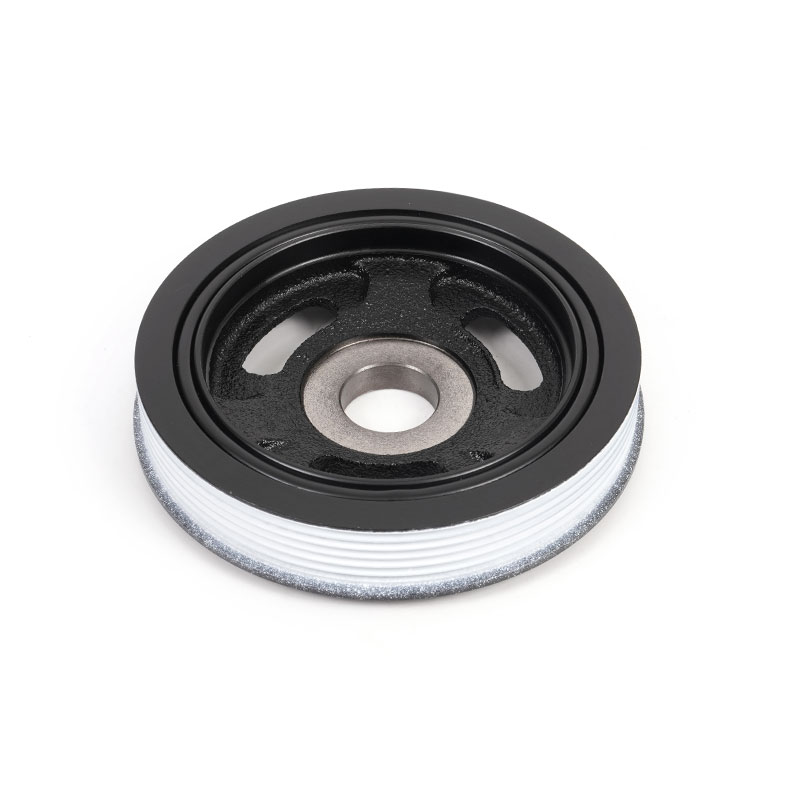
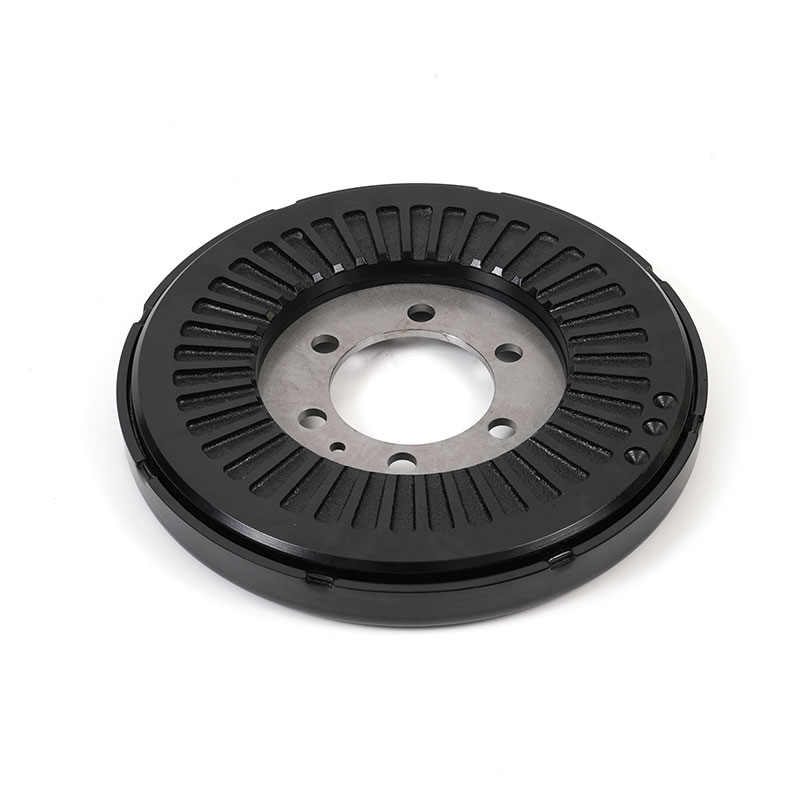
We offer off‑the‑shelf fluid dampers for popular performance engines: GM LS, Ford Coyote, Dodge Hemi, Honda K‑series, and Subaru EJ. We also build Có thể tùy chỉnh units for any engine configuration. All our performance dampers are CNC‑machined from billet aluminium and feature anodised finishes.
FAQ: Performance & Racing Applications
Will a fluid damper handle sustained high RPM (8,000+) hours?
Yes. Our silicone fluid is stable up to 150°C, and the housing is designed for high centrifugal loads. We have customers using our dampers in 24‑hour endurance races with no issues.
Can I use a fluid damper on a dry sump engine?
Absolutely. In fact, dry sump systems often increase torsional loads because of the additional pump drive. A fluid viscous damper is highly recommended.
Do you offer different colours or custom engraving?
Yes, as an OEM/ODM Nhà sản xuất, we can anodise the housing in any colour and laser‑engrave your logo or specifications.
What is the weight difference between a fluid and a rubber damper?
Fluid dampers are typically 10‑20% heavier due to the silicone and steel housing. For most performance applications, the added weight is a small penalty for the superior protection.
Can you build a damper for a custom billet crankshaft?
Yes. Provide the crank’s nose dimensions, bolt pattern, and desired inertia. We will machine a custom hub and inertia ring. Lead time is 6‑8 weeks.
Sources: SAE Paper 2015‑01‑2196 – Torsional Vibration in High‑Performance Engines; Auramaia dyno test data 2024.

 Tiếng Việt
  English
  简体中文
简体中文  Español
  Français
  Deutsch
  العربية
  한국어
한국어  Русский
  Português
  Italiano
  Maithili
  ไทย
ไทย  Türkçe