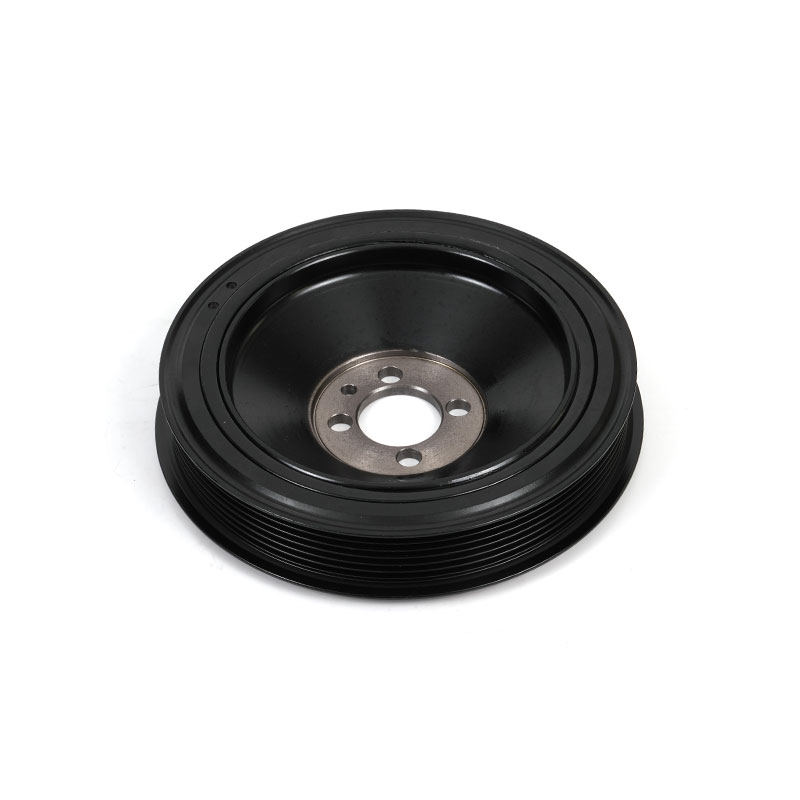
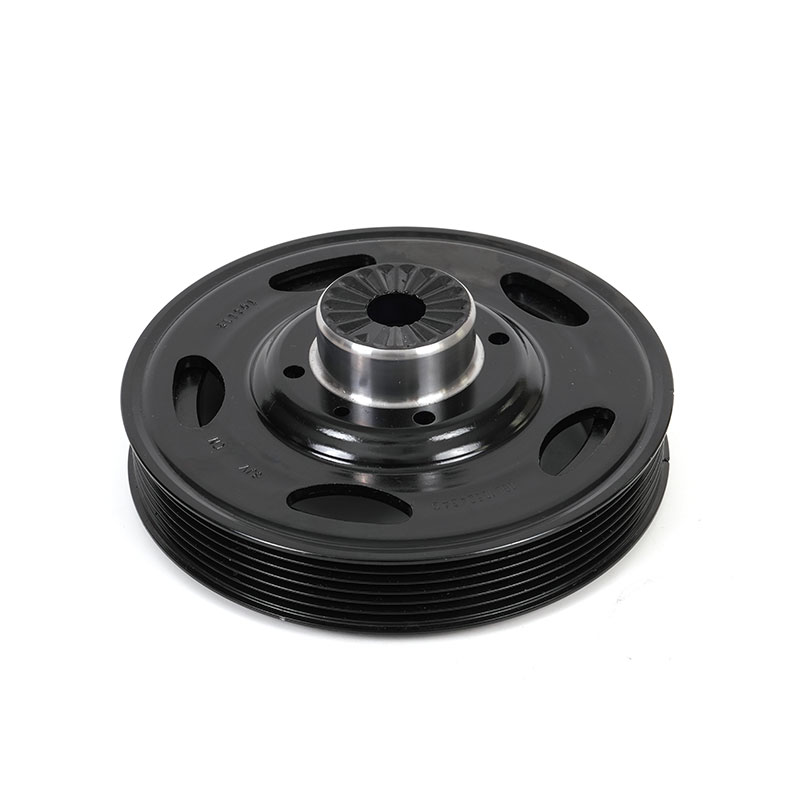
For vessel owners, marine engineers, and propulsion system managers, the marine engine vibration damper mounted on your main propulsion engine is a critical safety component—failure at sea can cause crankshaft fracture, leaving a vessel dead in the water and facing towing costs exceeding $50,000 per incident plus lost charter revenue.
The marine environment imposes demands on propulsion systems that no land-based application can match. Continuous operation—often 24 hours a day for weeks at a time—combined with the high inertia of a fixed-pitch propeller creates unique torsional stress patterns. Add saltwater corrosion, confined engine room temperatures, and the critical requirement for absolute reliability, and the marine engine vibration damper emerges as one of the most mission-critical components in your vessel’s propulsion train. Understanding how this component behaves in your specific operating environment is essential for any commercial vessel operator.
The Unique Torsional Environment of Marine Propulsion
A marine propulsion system differs fundamentally from automotive or industrial applications. The propeller, especially on fixed-pitch vessels, acts as a massive flywheel with significant inertia. When waves cause the propeller to alternately load and unload—a phenomenon known as propeller racing in heavy seas—the crankshaft experiences extreme torsional reversals. A torsional vibration damper designed for automotive duty cycles simply cannot manage these transient loads.
Consider a typical 300-horsepower marine diesel running at 1,800 RPM. Each cylinder firing impulse travels through the crankshaft to the propeller hub. But unlike a truck driveline with a clutch and transmission that absorb some vibration, the marine coupling transmits nearly all torsional impulses directly to the propeller—and, critically, reflects energy back to the engine. This reflection creates torsional nodes along the crankshaft that can amplify vibration amplitudes beyond the crankshaft’s endurance limit. The crankshaft vibration damper must absorb both the forward energy from firing impulses and the reflected energy from the propeller system.
Vessel-Specific Operating Profiles and Damper Demands
Different vessel types impose distinct stress patterns on the damper. Matching damper technology to your vessel’s duty cycle extends component life and protects your propulsion investment.
Tugboats and Workboats: High Torque, Frequent Reversals
Tug operations demand rapid acceleration, heavy loading, and frequent direction changes. The damper experiences maximum stress during engine acceleration from idle to full power—often dozens of times per shift. In these applications, viscous (silicone fluid) dampers demonstrate superior durability because they provide broadband damping across all frequencies, handling the wide RPM swings characteristic of workboat operations. Elastomer dampers, tuned for specific frequencies, may overheat during repeated acceleration cycles. Vessel operators report viscous damper service lives of 15,000 to 20,000 operating hours in tug applications, compared to 5,000 to 8,000 hours for elastomer designs.
Fishing Vessels: Variable Load, Extended Idle
Commercial fishing combines extended idle periods (during setting and hauling) with sustained full-power runs (transit to and from fishing grounds). This profile creates two distinct stress patterns: high-amplitude vibration at idle frequencies and sustained thermal loading during transit. A diesel engine vibration damper in this application must manage both conditions without degradation. The critical failure indicator for fishing vessel dampers is often overheating during extended full-power runs. Using an infrared thermometer, vessel engineers should verify damper surface temperature remains below 100°C for elastomer designs and below 120°C for viscous designs after sustained operation.
Yachts and Passenger Vessels: NVH Sensitivity
For passenger vessels, vibration control extends beyond engine protection to passenger comfort. Excessive torsional vibration transmits through the propulsion system as audible noise and felt vibration in passenger spaces. In these applications, the damper’s effectiveness is measured not just by crankshaft stress reduction but by whole-vessel NVH (noise, vibration, harshness) performance. This is where custom vibration damper manufacturer engineering becomes essential—a damper tuned to the specific engine-and-propeller combination can reduce cabin vibration levels by 50 to 70 percent compared to off-the-shelf components.
Classification Society Requirements and Compliance
Commercial vessels operating under flag state regulations must comply with classification society rules for propulsion system components. Lloyd’s Register, DNV, ABS, and other societies have specific requirements for vibration dampers used in propulsion systems.
Marine Damper Classification Requirements
| Requirement | Lloyd’s Register (LR) | DNV | ABS |
|---|---|---|---|
| Type Approval Required | Yes (for main propulsion) | Yes (for all propulsion components) | Yes (for vessels > 24m) |
| Material Traceability | Full lot traceability required | Full lot traceability required | Full lot traceability required |
| Fatigue Testing | 10 million cycles minimum | 10 million cycles minimum | 10 million cycles minimum |
| Burst Speed Test | 125% of max RPM | 120% of max RPM | 125% of max RPM |
| Inspection Interval (in service) | 5 years or 10,000 hours | 5 years or 12,000 hours | 5 years |
Vessel operators should verify that any replacement damper carries the appropriate classification society certification. Non-certified components can lead to survey failures, insurance complications, and regulatory violations. A qualified industrial vibration damper supplier with marine experience will provide certification documentation with each unit.
In-Depth: Marine Damper Failure Modes and Prevention Strategies
Marine damper failures often present differently than land-based failures due to the continuous-duty nature of vessel operations. Understanding these specific failure modes enables proactive prevention.
Thermal Runaway in Elastomer Dampers: Elastomer dampers rely on rubber’s ability to dissipate torsional energy as heat. Under sustained full-power operation, heat generation may exceed heat dissipation, causing the rubber temperature to rise progressively—a phenomenon called thermal runaway. When internal rubber temperature exceeds approximately 120°C, the rubber compound begins to cross-link, hardening permanently. Hardened rubber loses damping capacity, allowing torsional amplitudes to increase, which generates more heat. This positive feedback loop can destroy a damper within hours once initiated. Prevention requires selecting dampers with sufficient thermal mass and, for high-power marine applications, often specifying viscous dampers that handle continuous thermal loads more effectively.
Corrosion-Induced Seal Failure (Viscous Dampers): Viscous dampers feature a crimped seal around the housing perimeter. In marine engine rooms, salt-laden air and occasional water spray accelerate corrosion at the seal interface. Once corrosion breaches the seal, silicone fluid leaks out, and the damper loses damping capacity within hours or days. Prevention includes specifying dampers with corrosion-resistant coatings (zinc-rich primers, epoxy topcoats) and inspecting the damper perimeter during every engine room walk-through. Vessels operating in saltwater environments should expect viscous damper service lives of 8,000 to 12,000 hours before seal replacement is required.
Crankshaft Fretting at Mounting Interface: Marine dampers mount to the crankshaft nose, often using a taper or spline connection. Vibration transmitted from propeller-induced torsional loads can cause microscopic fretting wear at this interface. If undetected, fretting can progress to spline wear, allowing the damper to shift position and eventually loosen catastrophically. During scheduled drydock inspections, technicians should examine the damper mounting interface for signs of fretting corrosion—visible as reddish-brown oxide dust around the mounting surfaces. For vessels with high operating hours, replacing the damper mounting hardware (bolts, washers, retaining plates) at 10,000-hour intervals is a cost-effective preventive measure.
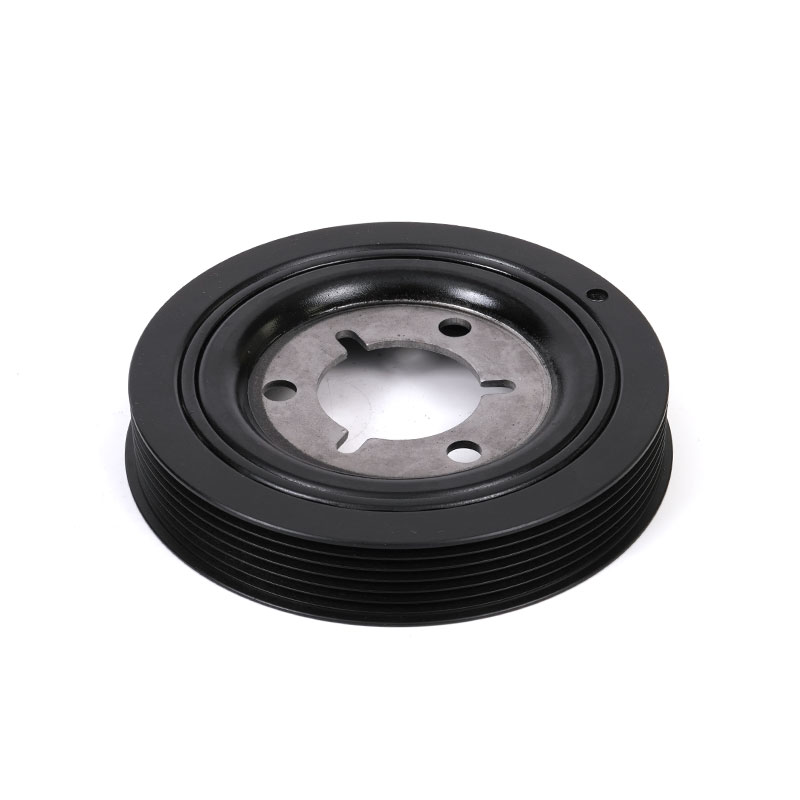
As a specialized torsional vibration damper factory serving marine applications, we manufacture viscous and elastomer dampers that meet the rigorous demands of commercial vessel operations. Our in-house testing center performs classification-required validation, including 10-million-cycle fatigue testing and burst speed verification at 125 percent of rated RPM. For vessel operators seeking to standardize maintenance across fleets, our role as a wholesaler with direct manufacturing capability ensures consistent quality and documented traceability for every damper we supply. When your vessel’s reliability depends on propulsion system integrity, partnering with a Manufacturer that understands marine applications and maintains classification society approvals transforms the vibration damper from a routine replacement part into a strategic reliability asset.
Sources: Lloyd’s Register Type Approval System LR-TA-001; DNVGL-CG-0339 Marine Engine Components; ABS Guide for Propulsion Systems; SAE J2481 Torsional Vibration Damper Testing; Marine Propulsion & Auxiliary Machinery, Society of Naval Architects and Marine Engineers (SNAME) Publication.
 English
  简体中文
简体中文  Español
  Français
  Deutsch
  العربية
  한국어
한국어  Русский
  Português
  Tiếng Việt
  Italiano
  Maithili
  ไทย
ไทย  Türkçe