TEKNİK MERKEZ 6 Nis · 10:48 am
When procurement professionals search for a akışkanlı sönümleyici, viskoz sönümleyici, or akışkan viskoz sönümleyici supplier, they are entering a global market projected to reach USD 2.5 billion by 2033. Whether you call it a harmonik sönümleyici kasnağı, krank kasnağı harmonik dengeleyici, or motor krank mili titreşim sönümleyicisi, these components are critical for protecting krank mili titreşim sönümleyicisi systems in heavy-duty diesel engines, marine propulsion, and industrial power generation. As a China-based Üretici, Auramaia provides OEM-quality fluid dampers for wholesale buyers worldwide.
The global torsional vibration damper market is valued at USD 2.5 billion and growing at 4.8% CAGR through 2033, driven by increasing demand for heavy-duty engine durability and stricter emission standards that require precise torsional control. Viscous fluid dampers are replacing rubber elastomers in premium applications due to their superior broadband performance and longer service life.
Auramaia operates as a direct Üretici ve Tedarikçi of fluid viscous dampers, serving Toptancı partners across North America, Europe, and Asia. Our Özelleştirilebilir OEM/ODM capabilities allow distributors to offer private-labeled viskoz sönümleyici solutions with full technical documentation and competitive lead times from our China factory.
The Numbers That Matter: Market Size and Growth Drivers
Understanding market dynamics helps B2B buyers make informed sourcing decisions. Recent industry data provides clear signals:
- Global crankshaft torsional vibration damper market: USD 101.3 billion (RMB) in 2024, projected to reach 150.8 billion by 2031 at a CAGR of 5.9%[reference:0]
- Automotive damper pulley market: USD 1.35 billion in 2024, growing at 4.85% CAGR through the forecast period[reference:1]
- Harmonic damper market: Projected to reach USD 3.5 billion by 2035, with a CAGR of 5.9% from 2025 to 2035[reference:2]
- Torsional vibration damper market: USD 58 million in 2023, forecast to reach USD 89 million by 2030 at 6.3% CAGR[reference:3]
Regional Breakdown: Where Demand is Concentrated
According to industry analysts, regional demand patterns significantly influence supply chain strategies:
| Region | Market Share (2023) | Growth Outlook | Key Drivers |
|---|---|---|---|
| Asia Pacific | 35% | Fastest growing | Automotive manufacturing expansion in China and India |
| North America | 30% | Stable | Class 8 truck fleet replacement cycles |
| Europe | 25% | Moderate | Stringent emission regulations (Euro VII) |
| Latin America | 5% | Emerging | Infrastructure development |
| Middle East & Africa | 5% | Emerging | Oil & gas industry machinery |
Asia Pacific’s dominance is fueled by China’s position as the world’s largest automobile producer, accounting for approximately 32% of global vehicle production[reference:4]. For B2B buyers, this means shorter supply chains and competitive pricing from China-based Manufacturers.
How to Identify a High-Quality Fluid Damper Manufacturer
For procurement managers, technical evaluation criteria separate capable suppliers from commodity traders. Here are five essential questions to ask potential Tedarikçi partners:
- What testing standards do you follow? Quality manufacturers reference SAE J2481 for torsional fatigue testing, ISO 1940-1 for dynamic balancing, and maintain IATF 16949 certification[reference:5].
- Do you have in-house testing equipment? Capable Üretici facilities include dynamic balancing machines, torsional fatigue testers (10+ million cycles), and environmental chambers (-40°C to 150°C).
- What is your silicone fluid specification? Premium akışkan viskoz sönümleyici use high-viscosity PDMS silicone oil with documented viscosity tolerance across temperature ranges.
- Can you provide material traceability? Full traceability from raw material to finished component is essential for warranty management and quality audits.
- What is your typical lead time for wholesale orders? Reliable Toptancı partners maintain 15-30 day lead times for stock items and 45-60 days for Özelleştirilebilir OEM/ODM projects.
Deep Dive: The Silicone Fluid Polymerization Problem
One of the most critical technical considerations for B2B buyers sourcing viskoz sönümleyici products is understanding silicone fluid degradation over time. Unlike rubber elastomers that fail visibly (cracking, de-bonding), silicone fluid undergoes a gradual, invisible process called polymerization. Under sustained high-temperature operation—common in heavy-duty trucking, marine propulsion, and continuous generator service—the long-chain polymer molecules in the fluid begin cross-linking. This increases fluid viscosity progressively. At first, higher viscosity actually increases damping effectiveness. But once viscosity exceeds the design threshold by approximately 30-40%, the fluid becomes too thick to shear properly. The inertia ring begins to move with the housing rather than independently, dramatically reducing damping capacity. In severe cases, the fluid can solidify into a paste, locking the inertia ring completely.
This failure mode is particularly dangerous because it produces no visible external signs. A krank mili titreşim sönümleyicisi with polymerized fluid may look perfect externally while providing zero crankshaft protection. This is why OEMs like Caterpillar recommend damper replacement at 500,000-mile intervals regardless of appearance[reference:6]. Premium manufacturers like Auramaia address this by specifying silicone fluid with enhanced thermal stability additives and providing application-specific replacement interval guidance based on actual operating temperatures.
The Viscous vs. Elastomer Decision: A Procurement Framework
For B2B buyers managing inventory across multiple applications, understanding when to specify each damper type optimizes both cost and performance:
| Criterion | Akışkanlı Viskoz Sönümleyici | Elastomer (Rubber) Damper | Recommendation |
|---|---|---|---|
| Best application | Variable-speed, heavy-duty, continuous operation | Steady-speed, cost-sensitive, light-duty | Heavy-duty: Viscous; Light-duty: Elastomer |
| Temperature range | -40°C to 150°C | -20°C to 100°C (standard) | Extreme climates: Viscous |
| Failure visibility | Hidden (fluid polymerization) | Visible (rubber cracking, bulging) | Preventive programs: Viscous |
| Service life (heavy-duty) | 500,000 miles / 15,000 hours | 80,000-150,000 miles | Long-haul fleets: Viscous |
| Cost per mile | $0.001 – $0.002 | $0.003 – $0.006 | Viscous has lower TCO |
Auramaia: Your China-Based Fluid Damper Partner
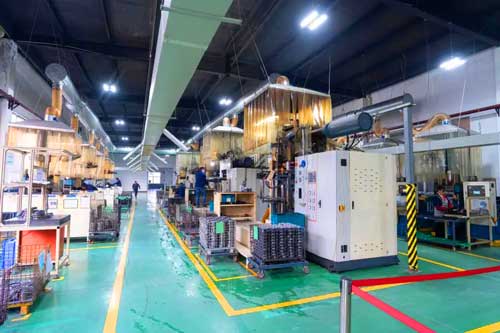
As a vertically integrated Üretici, Auramaia offers B2B buyers distinct advantages: IATF 16949-certified production, in-house testing including 20-million-cycle torsional fatigue validation, complete material traceability, and flexible OEM/ODM services. Our Toptancı program includes volume pricing, private labeling, and inventory management support. We invite global distributors and procurement professionals to evaluate our quality systems and technical capabilities.
FAQ: B2B Sourcing for Fluid Viscous Dampers
What is the minimum order quantity for wholesale fluid dampers?
For standard part numbers, MOQ is 10 units (mix-and-match allowed). For Özelleştirilebilir OEM/ODM Özel etiketli projelerde, minimum sipariş miktarı (MOQ) genellikle tasarım başına 50 adetten başlar. Daha yüksek hacimli siparişlerde kademeli fiyat indirimleri uygulanır.
How do I verify a China-based Manufacturer’s quality certifications?
Request current IATF 16949 and ISO 9001:2015 certificates, verifying the scope explicitly includes vibration damper manufacturing. For marine applications, also request DNV, Lloyd’s Register, or ABS type approval documentation.
What is the typical warranty period for wholesale fluid dampers?
Auramaia offers a 24-month warranty on all fluid viscous dampers against manufacturing defects. Extended warranty programs are available for qualified fleet and distributor accounts based on annual volume.
Can you cross-reference OEM part numbers to your products?
Yes. Our cross-reference database covers major engine manufacturers including Cummins (4955112, 5467890), Caterpillar (7C-7323, 4P-4297), Detroit Diesel (23514917, 23514918), and PACCAR MX-13. We also provide dimensional verification drawings upon request.
What is the lead time for a 500-unit wholesale order?
For stocked part numbers, 500 units ship within 20-25 business days. For custom OEM/ODM orders, lead time is 45-60 days after design approval and sample validation.
Distribütörler için özel etiketleme hizmeti sunuyor musunuz?
Kesinlikle. Bir Tedarikçi with full manufacturing control, we print your brand, part number, and installation torque specifications on the damper housing. Custom packaging and application-specific cataloging are also available.
Sources: Strategic Revenue Insights (2025); Bosson Research (2025); Verified Market Reports (2025); YHResearch (2025).