
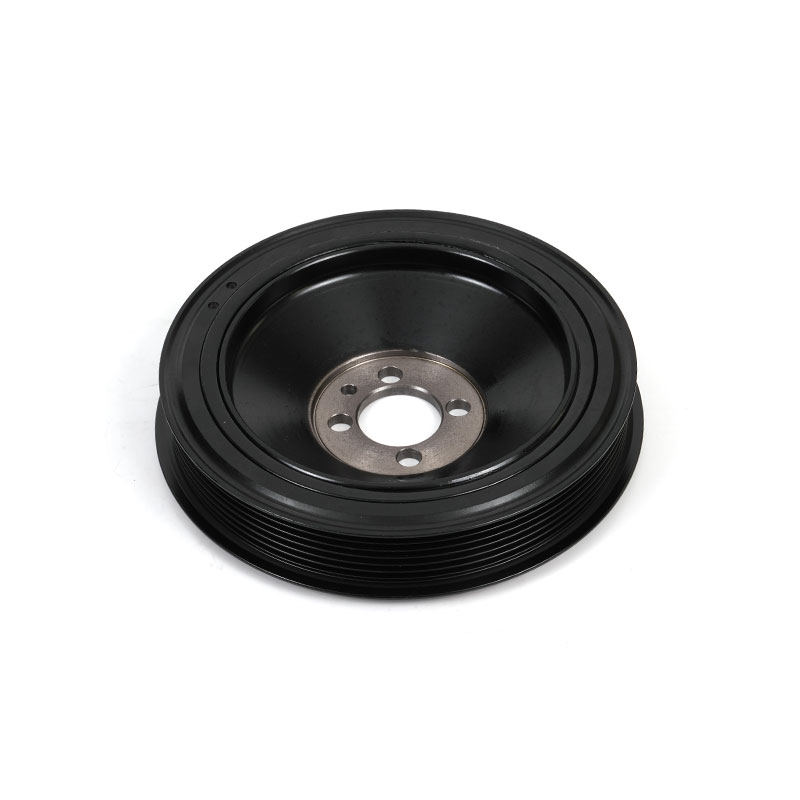
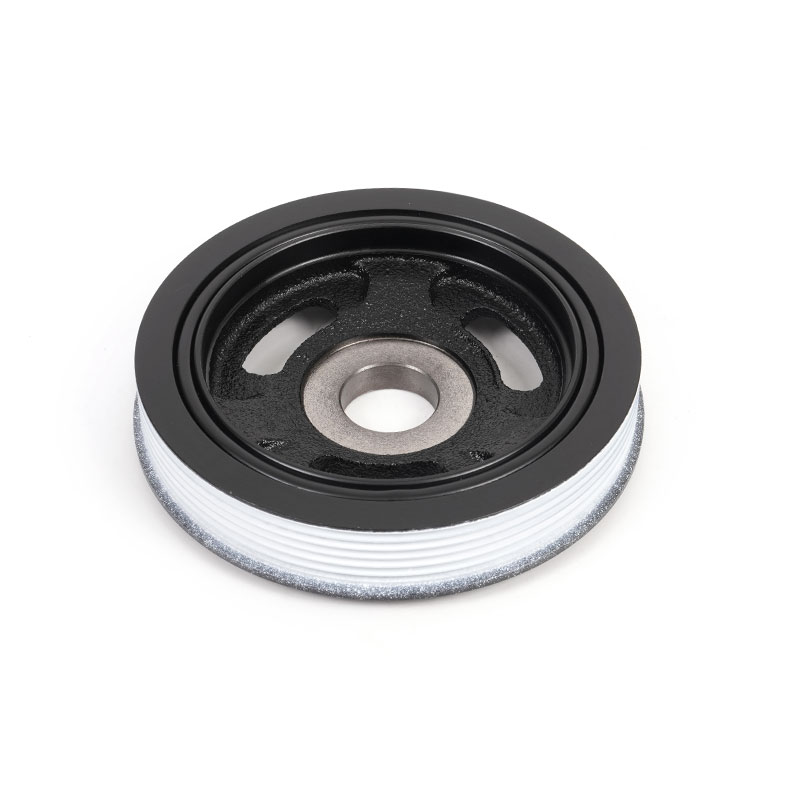
For facility managers, power generation contractors, and critical infrastructure operators, the generator engine vibration damper is a component whose failure means not just equipment damage but potential failure of emergency power systems during the moment they are most needed—when the grid goes down and your facility depends on immediate, reliable backup power.
Data centers, hospitals, telecommunications facilities, and manufacturing plants invest millions in backup power systems. Yet the generator engine vibration damper—a component costing a few hundred dollars—often receives less attention than fuel systems, transfer switches, or control panels. In prime power applications where generators run continuously for days or weeks, damper reliability is equally critical. Understanding how this component performs under the unique demands of generator service is essential for any organization that depends on reliable power.
The Generator Operating Profile: Constant Speed, Variable Load
Unlike automotive or marine engines, generator engines operate at constant governed speed—typically 1,500 RPM for 50 Hz systems or 1,800 RPM for 60 Hz systems. This constant-speed operation might seem less demanding than variable-speed applications, but it presents unique challenges for the engine vibration damper.
At constant speed, the engine operates at a single frequency determined by firing order and RPM. If that frequency coincides with the crankshaft’s natural frequency—or any of its harmonics—torsional vibration amplitudes become sustained, not transient. A generator operating at a critical speed for hours or days subjects the damper to continuous maximum stress. This sustained stress is why generator applications demand dampers that maintain consistent damping characteristics under continuous thermal load, without the thermal runaway that can affect elastomer designs in high-duty applications.
Additionally, generators experience rapid load changes. When a large motor starts or a facility experiences sudden power demand, the generator engine must accelerate to meet the load transient. This load application sends a torsional shock through the crankshaft. Over thousands of load cycles, these transients can fatigue crankshaft fillets and damper bonding interfaces. A well-engineered crankshaft vibration damper design accounts for both steady-state operation at governed speed and the transient loads of motor starting and load shedding.
Application-Specific Demands: Standby vs. Prime Power
Generator applications divide into two categories with distinctly different damper demands. Understanding which category applies to your installation guides both component selection and maintenance strategy.
Standby Generators: Low Hours, Critical Reliability
Standby generators accumulate relatively few operating hours—typically 50 to 200 hours annually during weekly exercise runs. However, when a utility outage occurs, these generators must start instantly and run reliably, often for days. The challenge for standby applications is that low operating hours mean the damper ages primarily through time-dependent degradation rather than cyclic fatigue. Rubber compounds harden naturally over time due to oxidation; silicone fluids can experience seal degradation even with minimal operation.
For standby applications, crankshaft vibration damper testing should focus on time-based indicators: rubber hardness measurements (using a durometer), visual inspection for cracking or bulging, and for viscous dampers, seal integrity checks. Industry practice recommends damper replacement every 8 to 10 years for standby generators, regardless of operating hours, based on elastomer aging data from the rubber manufacturing industry.
Prime Power and Continuous-Duty Generators: High Hours, Sustained Stress
Prime power applications—such as remote mining operations, island power systems, or continuous industrial generation—run generators thousands of hours annually. Here, cyclic fatigue drives damper degradation. A generator running at 1,800 RPM for 24 hours experiences over 2.5 million torsional cycles per day. Over a year of continuous operation, that exceeds 900 million cycles.
In these applications, industrial vibration damper supplier selection must prioritize thermal stability and fatigue resistance. Viscous dampers, with their broadband damping and high-temperature silicone fluids, typically outperform elastomer designs in prime power applications. Facility operators should plan damper replacement based on operating hours: 8,000 to 12,000 hours for viscous dampers, 5,000 to 8,000 hours for elastomer designs in continuous-duty service.
Load Transients and Their Impact on Damper Life
Generator load transients—particularly motor starting—create torsional shocks that can exceed the damper’s design limits if not properly managed. The relationship between generator load and damper stress deserves deeper examination.
Typical Load Transients and Damper Impact
| Load Type | Torque Transient Magnitude | Damper Stress Mechanism | Mitigation Strategy |
|---|---|---|---|
| Direct-on-line motor start | 600-800% of rated torque | Single large torsional shock | Soft-start devices; specify dampers with high shock-load rating |
| Block load (full facility load) | 100-150% of rated torque | Sustained overload condition | Generator sizing; damper thermal margin |
| Compressor cycling | 200-300% of rated torque | Repetitive moderate shocks | Elastomer dampers with high-strain compounds |
| UPS/rectifier load | 50-80% of rated torque | Continuous harmonic distortion | Viscous dampers for broadband control |
The data reveals a critical insight: applications with frequent motor starting or compressor cycling subject the damper to repeated shock loads that accelerate fatigue regardless of total operating hours. In these facilities, dampers may require replacement based on number of starts rather than hours. A generator that starts a 200-horsepower motor 50 times daily can exceed damper fatigue limits in half the calendar time of a generator with fewer starts.
In-Depth: Generator Damper Failure Analysis – A Case Study Approach
Understanding failure patterns through detailed analysis enables predictive maintenance programs. Consider two common generator damper failure scenarios documented in industry maintenance records.
Case 1: Standby Generator with Elastomer Damper – Age-Related Hardening: A 500 kW standby generator at a data center underwent quarterly exercise runs for nine years, accumulating 540 total operating hours. During a routine 10-year service, technicians noted the damper’s rubber element felt significantly harder than a new unit. Durometer testing confirmed rubber hardness increased from specification (Shore A 65) to Shore A 89—a 37 percent increase. Hardened rubber cannot flex adequately, transferring vibration directly to the crankshaft. Analysis revealed that even with minimal cyclic fatigue, oxidative aging hardened the rubber compound beyond its effective range. The facility replaced the damper proactively; six months later, a 72-hour utility outage occurred. Post-outage inspection confirmed the new damper performed correctly, while the original would likely have allowed damaging vibration during the extended run. Lesson: Standby generators require time-based damper replacement regardless of hours.
Case 2: Prime Power Generator with Viscous Damper – Fluid Shear Degradation: A 1.2 MW generator at a manufacturing plant ran 18 hours daily, five days weekly, accumulating 4,500 operating hours annually. After four years (18,000 hours), maintenance technicians noted the damper case temperature during operation was 30°C higher than historical readings. Vibration analysis showed torsional amplitudes increased from 0.18 degrees at installation to 0.42 degrees. The damper was removed and sectioned for analysis. The silicone fluid had experienced shear degradation—the long-chain polymer molecules in the fluid had broken down under continuous high-shear operation, reducing fluid viscosity. Lower viscosity reduced damping capacity, allowing higher vibration amplitudes. The manufacturer’s recommendation for 12,000-hour replacement intervals would have prevented this degradation. Lesson: Prime power viscous dampers must be replaced based on hours, not condition monitoring alone, as fluid degradation occurs gradually and may not present obvious external signs until advanced.
As a torsional vibration damper factory with in-house material science and testing capabilities, we engineer generator dampers for both standby and prime power applications. Our elastomer dampers utilize oxidation-resistant compounds that maintain flexibility through extended calendar life; our viscous dampers employ shear-stable silicone fluids formulated for continuous-duty applications. For generator OEMs and aftermarket suppliers, our OEM/ODM capabilities provide customizable solutions matched to specific generator set configurations, with documented IATF 16949 quality systems ensuring every damper meets the reliability standards that mission-critical power demands. When your facility’s uptime depends on generator reliability, choosing a Manufacturer that understands the unique demands of power generation applications transforms a simple component into a strategic investment in operational continuity.
Sources: NFPA 110 Standard for Emergency and Standby Power Systems; EGSA (Electrical Generating Systems Association) Technical Bulletins; ASTM D2240 Rubber Hardness Durometer Testing; SAE J2481 Torsional Vibration Damper Testing; Diesel Generator Maintenance Best Practices, Caterpillar Electric Power Division.
 English
  简体中文
简体中文  Español
  Français
  Deutsch
  العربية
  한국어
한국어  Русский
  Português
  Tiếng Việt
  Italiano
  Maithili
  ไทย
ไทย  Türkçe