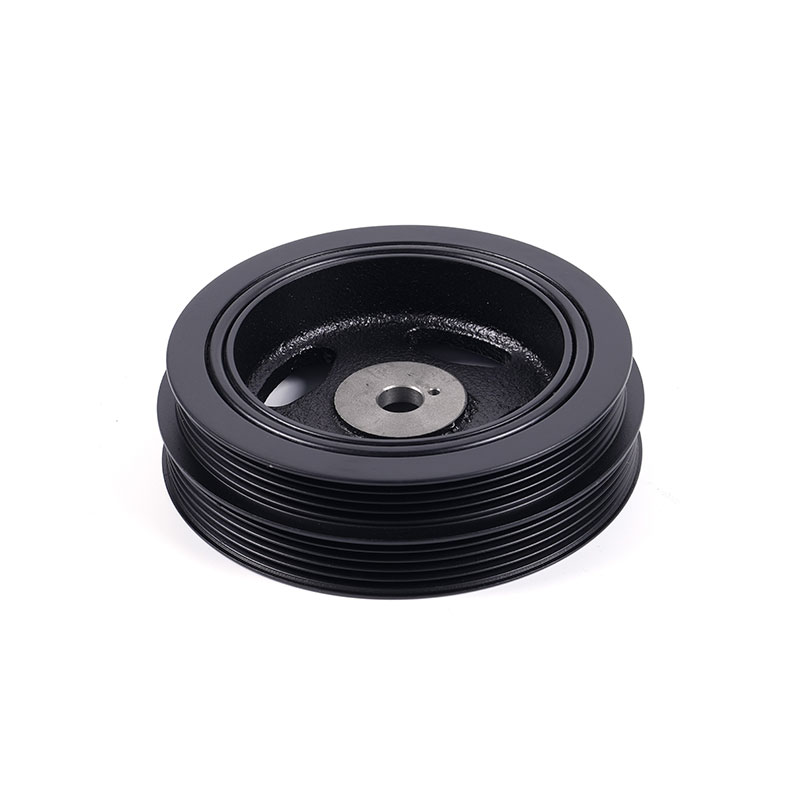
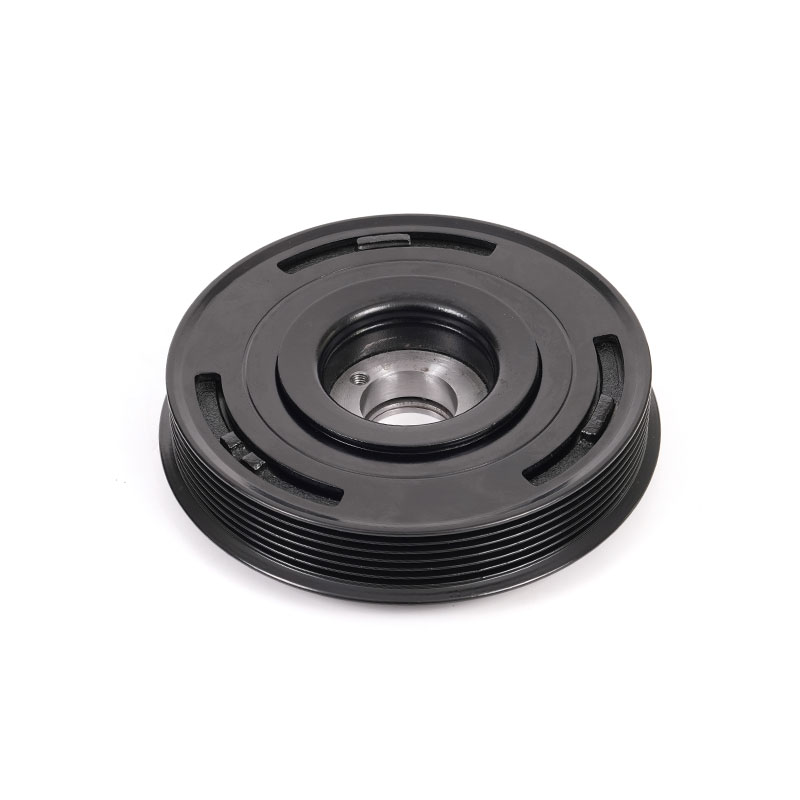
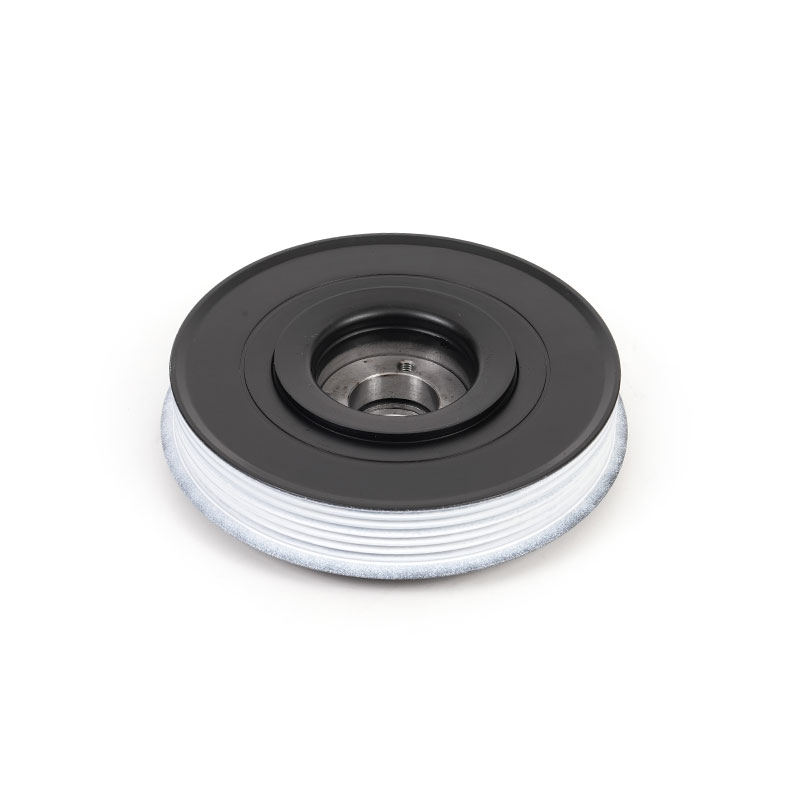
For service technicians and fleet mechanics, a smorzatore fluido (chiamato anche smorzatori viscosi o smorzatore di vibrazioni dell'albero motore) is one of the most overlooked yet critical components on any diesel engine. Unlike a solid bilanciatori armonici per pulegge dell'albero motore, a fluid viscous damper uses silicone fluid to absorb torsional twist. When it fails, the results are catastrophic: broken crankshafts, destroyed bearings, and an engine that stops without warning. This guide helps you identify, replace, and source the right ammortizzatore di vibrazioni del motore for heavy‑duty trucks, generators, and industrial equipment.
Industry data recommends replacing heavy‑duty fluid viscous dampers at 500,000 miles or 15,000 operating hours. Failure to replace leads to silicone fluid hardening, loss of damping, and crankshaft fatigue failure costing over $25,000 in repairs and downtime. Visible signs of failure include fluid leaks, housing wobble, and increased front‑end vibration.
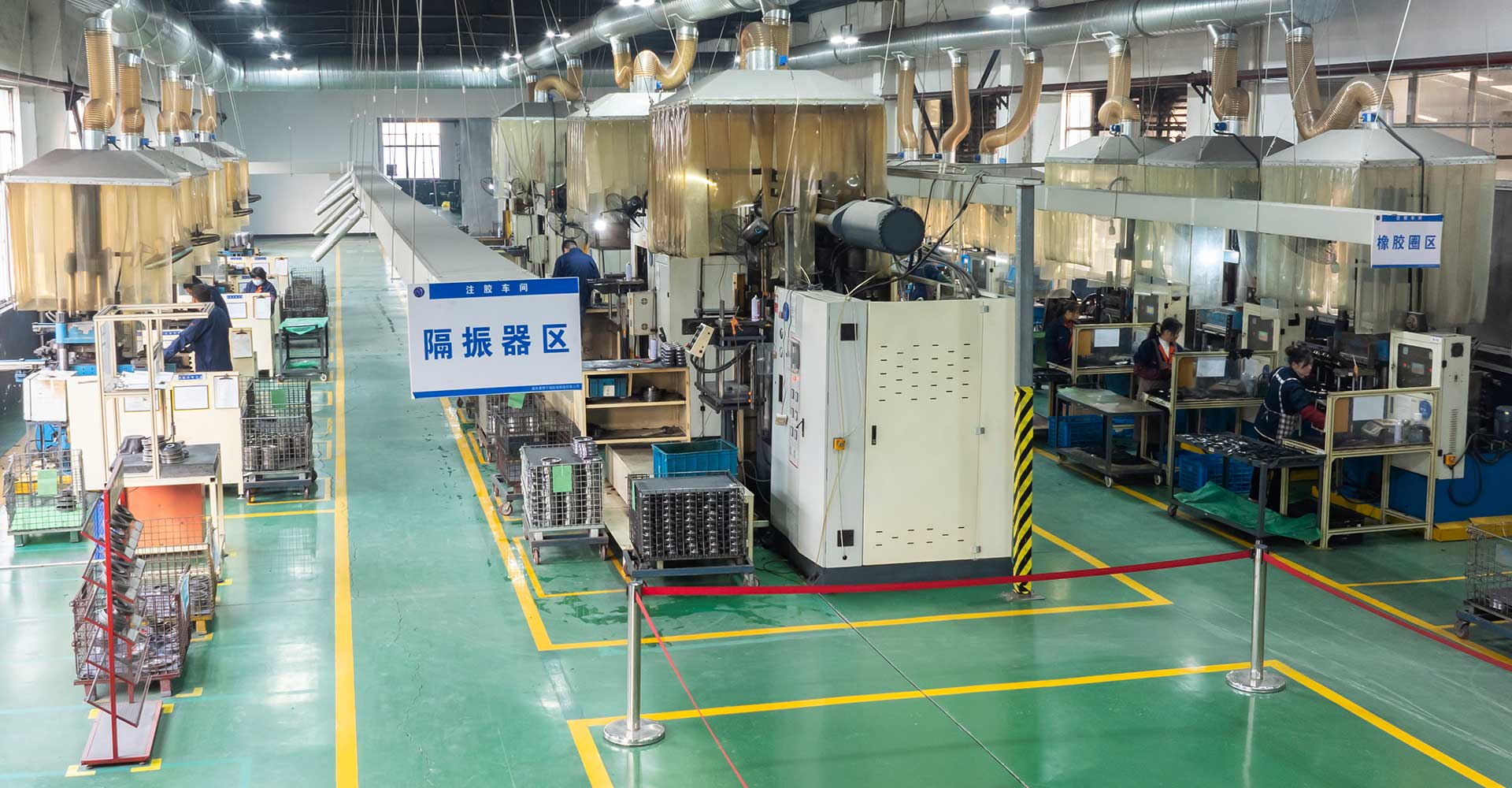
Auramaia è un'azienda con sede in Cina Produttore e Fornitore affidabile of aftermarket fluid dampers for Cummins, Detroit, Caterpillar, PACCAR, and other major engine brands. We offer Canali all'ingrosso programs, Progetti personalizzabili private labelling, and full Capacità OEM/ODM capabilities, all from our IATF 16949‑certified factory.
When to Replace a Fluid Viscous Damper: The 500,000‑Mile Rule
Leading damper manufacturers such as Vibratech TVD recommend replacement at 500,000 miles or 15,000 hours for over‑the‑road Class 8 trucks. This is not a suggestion—it is an engineering necessity. The silicone fluid inside a viscous damper gradually hardens after prolonged heat exposure. Once hardened, the inertia ring can no longer shear freely, and damping effectiveness drops sharply. Engines rebuilt without replacing the damper suffer greatly reduced life expectancy and face a high risk of crankshaft failure. For stationary engines and generator sets, Vibratech TVD’s guideline is 25,000 operating hours.
Deep Dive: The Silicone Hardening Mechanism
The silicone fluid in a viscous damper is a long‑chain polymer that relies on molecular slippage to convert kinetic energy into heat. After hundreds of millions of shear cycles and thousands of hours at elevated temperatures (typically 90‑120°C), the polymer chains begin to cross‑link—a process called polymerization. The fluid becomes thicker, eventually turning into a gel‑like paste. When this happens, the inertia ring moves in near‑lockstep with the housing, and the damper becomes little more than a heavy, useless lump of metal. The danger is that this process produces no visible external signs. The damper may look perfect but offer zero protection. That is why time‑ or mileage‑based replacement is essential, regardless of appearance. Auramaia uses advanced silicone formulations with enhanced thermal stabilisers to extend service life, but we still recommend following OEM intervals.
Seven Signs Your Fluid Damper Is Failing
- Visible fluid leakage. Any wetness around the housing seam or inertia ring indicates seal failure. Replace immediately.
- Housing wobble. If the damper does not spin true, the inertia ring may be loose or the housing distorted.
- Increased front‑end vibration. A failing damper allows more torsional twist, which you can feel through the cab or chassis.
- Belt noise or wear. Misalignment from a distorted housing throws belts and wears pulleys unevenly.
- Accessory drive gear wear. The timing gears and front accessory drive are the first to suffer when damping is lost.
- Loss of fuel economy. A degraded damper increases timing scatter, which reduces combustion efficiency.
- Over‑temperature housing. After a full‑load run, the damper surface should not be significantly hotter than the engine block.
Why Correct Fitment Matters: Cross‑Reference Essentials
Using the wrong damper is as bad as using a failed one. An incorrect inertia value shifts the critical speed into the operating range, amplifying vibration instead of controlling it. Professional aftermarket sellers rely on accurate cross‑reference data. For example, a Cummins 4919864 damper must be matched to the specific engine family and horsepower rating. Auramaia provides a comprehensive cross‑reference guide covering thousands of OEM numbers, with dimensional verification to ensure correct fitment.
Installation Tips for Service Professionals
- Always use new mounting bolts. Damper bolts are torque‑to‑yield in most modern engines—single use only.
- Clean the crankshaft nose thoroughly. Any debris or corrosion affects seating and balance.
- Check crankshaft runout. Before installing the new damper, measure the crankshaft snout runout. Anything above 0.002″ requires correction.
- Torque to specification. Follow the engine manufacturer’s torque sequence and value. Under‑torquing allows loosening; over‑torquing distorts the hub.
- Sostituire la guarnizione di tenuta dell'albero motore anteriore. Con lo smorzatore rimosso, sostituire la guarnizione comporta un tempo di lavoro minimo e previene perdite future.
FAQ: Sostituzione smorzatore a fluido e mercato dei ricambi
Posso sostituire uno smorzatore a elastomero con uno smorzatore viscoso a fluido?
Sì, purché l'interfaccia di installazione e il valore d'inerzia corrispondano. Gli smorzatori viscosi a fluido offrono controllo a banda larga e una maggiore durata operativa, rendendoli la scelta ottimale per applicazioni gravose. Tuttavia, verificate sempre con il vostro fornitore che lo smorzatore a fluido sia approvato per il vostro specifico modello di motore, poiché le caratteristiche di smorzamento differiscono dall'elastomero.
Come posso fare un incrocio di riferimento tra un numero di ricambio OEM e un sostituto?
Fornite al vostro fornitore il numero OEM (es. Cummins 4955112, Caterpillar 7C‑7323, Detroit 23514917) e il numero di serie del motore. Un fornitore qualificato eseguirà il cross‑referencing con il ricambio equivalente corretto e fornirà, se necessario, una verifica dimensionale.
Qual è la garanzia sugli smorzatori a fluido del mercato dei ricambi?
Auramaia offre una garanzia di 24 mesi su tutti gli smorzatori viscosi a fluido contro difetti di fabbricazione. Programmi di garanzia estesa sono disponibili per clienti all'ingrosso e flotte.
Offrite smorzatori a marchio privato per il mio brand di distribuzione?
Sì. In qualità di Produttore con Capacità OEM/ODM capacità, produciamo smorzatori a fluido a marchio privato con il vostro branding, confezionamento personalizzato e catalogazione specifica per applicazione. Si applicano quantità minime d'ordine.
Qual è la durata di conservazione di uno smorzatore a fluido prima dell'installazione?
Se conservato correttamente in un ambiente asciutto e climatizzato (15‑25°C, umidità inferiore al 60%), il fluido al silicone non si deteriora. Tuttavia, le guarnizioni in elastomero potrebbero seccarsi dopo un lungo periodo di stoccaggio. Raccomandiamo di ruotare le scorte annualmente e di installare entro 5 anni dalla produzione.
Fonti: Vibratech TVD – Quando sostituire uno smorzatore viscoso per albero motore; Proteggi il tuo motore: È un mondo gravoso là fuori! (Blog Vibratech TVD, 2025); Dati di cross‑referencing FinditParts.
 Italiano
  English
  简体中文
简体中文  Español
  Français
  Deutsch
  العربية
  한국어
한국어  Русский
  Português
  Tiếng Việt
  Maithili
  ไทย
ไทย  Türkçe