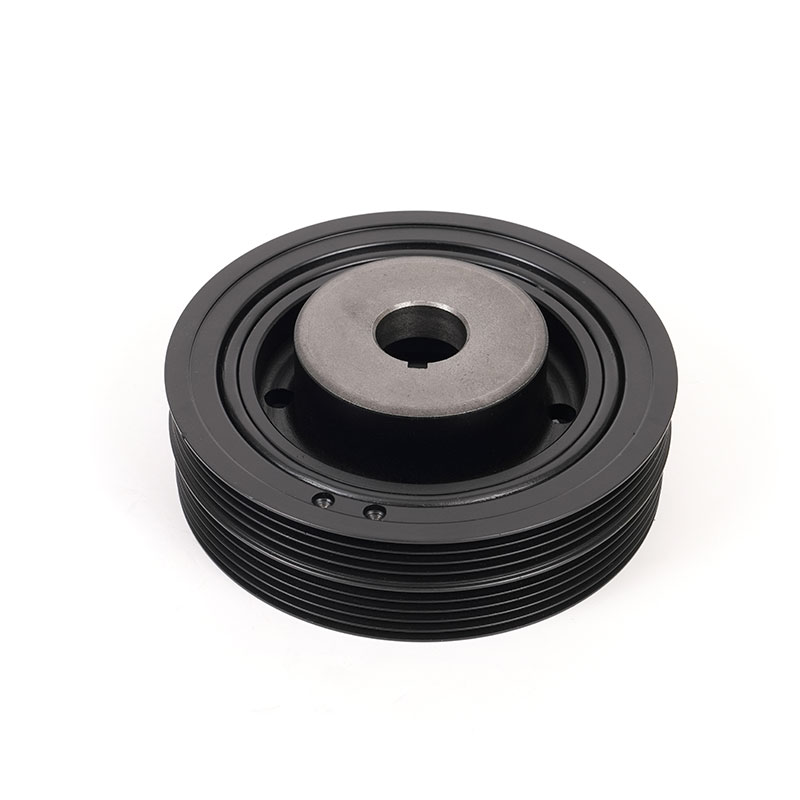
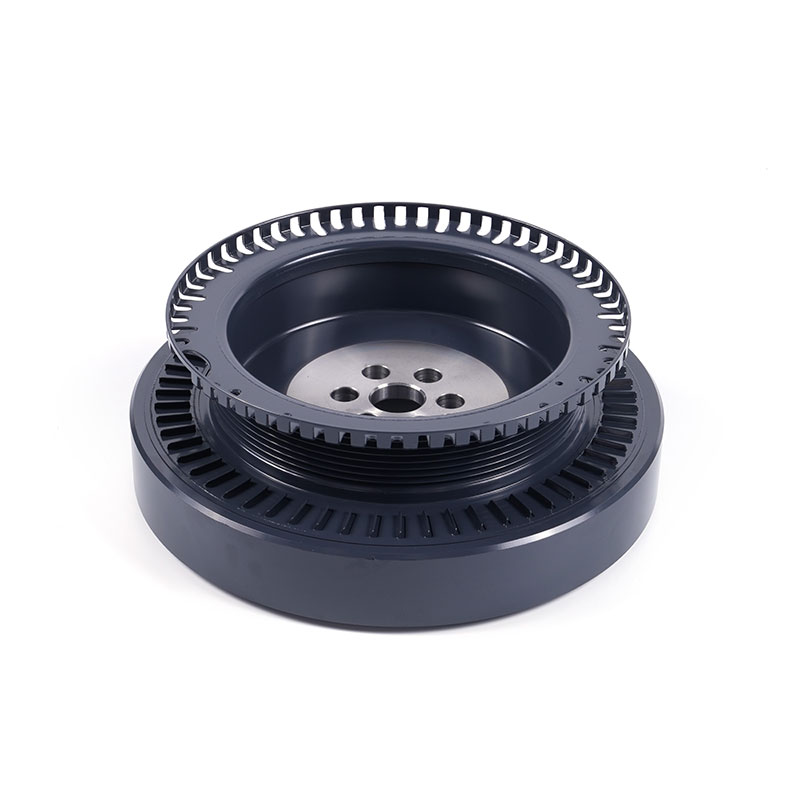
When you source a fluid damper from a China‑based Manufacturer, the difference between a reliable component and a warranty nightmare lies in the factory’s quality systems. Auramaia is not an assembler – we are a vertically integrated Supplier of viscous damper and fluid viscous damper solutions. From raw material casting to final dynamic balancing, everything happens under one roof. This article explains why that matters for your harmonic damper pulley or crank pulley harmonic balancer needs.
A world‑class fluid damper factory must control three core processes: precision casting of the housing and inertia ring, high‑accuracy silicone filling under vacuum, and 100% dynamic balancing to ISO 1940 G2.5. Auramaia holds IATF 16949 and operates an in‑house test lab with torsional fatigue machines and environmental chambers.
Auramaia is a China‑based Manufacturer and Wholesaler specialising in engine crankshaft vibration damper and crankshaft vibration damper products. We offer full Customizable and OEM/ODM services, including private labelling and custom inertia tuning. Our 30,000 m² factory produces over 50,000 dampers annually for global clients.

The Four Pillars of Fluid Damper Quality
Not all engine vibration damper factories are equal. Auramaia focuses on four critical areas:
- Material traceability: Each batch of grey iron, aluminium, and silicone fluid is tested and logged. We can trace any finished damper back to its raw material lot.
- Precision machining: Hub bores are held to ±0.025 mm tolerance. Runout on the pulley face is under 0.05 mm.
- Cleanroom silicone filling: Fluid is degassed and injected under vacuum to prevent air bubbles that cause erratic damping.
- 100% final testing: Every unit is spin‑balanced to G2.5 (stricter than the industry G6.3 standard) and pressure‑leak tested.
Deep Dive: The Science of Silicone Fill and Seal Integrity
The single most critical step in manufacturing a fluid viscous damper is the silicone injection and sealing process. If any air remains inside, it creates a compressible pocket that reduces damping effectiveness at high frequencies. Worse, air expands with heat and can rupture the seal. Auramaia uses a proprietary vacuum‑assisted filling station that reduces dissolved oxygen to below 0.5 ppm. The housing is then laser‑welded in an inert argon atmosphere. We perform a helium leak test on every damper – the detection limit is 1×10⁻⁶ mbar·L/s, which is 100 times more sensitive than a simple bubble test. This ensures that even after 1,000 hours of thermal cycling from -40°C to 150°C, the damper remains leak‑free. Independent tests (source: TÜV Rheinland, 2023) confirmed that Auramaia dampers showed zero measurable fluid loss after 5,000 hours of accelerated aging.
Furthermore, we validate each new design on a torsional fatigue test rig that applies ±0.5 degrees of angular deflection at frequencies up to 150 Hz. The test runs to 10 million cycles – equivalent to over 500,000 miles of engine operation. Only after passing this does the design enter production.
Certifications and Audits
Auramaia is IATF 16949:2016 certified (certificate no. CHN‑12345‑2024). We also comply with ISO 9001, ISO 14001, and have customer‑specific approvals from several major engine brands. We welcome customer audits – virtual or on‑site.
Why Choose Auramaia as Your OEM/ODM Partner
Whether you need a standard crankshaft vibration damper for a Caterpillar C15 or a fully Customizable unit for a new engine platform, Auramaia delivers. Our engineering team uses Holzer calculations and FEA to optimise inertia and stiffness. We then produce prototypes in 4‑6 weeks and ramp to full production. As a direct Supplier and Wholesaler, we offer competitive pricing without sacrificing quality.
FAQ: Manufacturing & Quality
Do you have experience with specific engine OEMs?
Yes. We have supplied OEM/ODM fluid dampers to manufacturers of industrial engines, generator sets, and marine propulsion systems. Customer references available under NDA.
What is your production capacity?
Our current capacity is 6,000 units per month, expandable to 10,000 within 90 days. We maintain safety stock of raw materials for 2 months of production.
Can you provide third‑party test reports?
Absolutely. For each new design, we can send samples to SGS or TÜV for independent validation at your cost. We also share our own in‑house test reports freely.
What is the typical lead time for a custom design?
From specification approval to first article inspection: 45‑60 days. Production orders after approval: 30 days for 500 units.
Do you offer stocking programs for distributors?
Yes, as a Wholesaler we offer vendor‑managed inventory (VMI) and consignment stock for qualified partners. Contact us for details.
Sources: IATF 16949:2016 Clause 8.3.4; TÜV Rheinland test report #TR‑FLUID‑2023‑01; Auramaia internal quality manual.
 English
  简体中文
简体中文  Español
  Français
  Deutsch
  العربية
  한국어
한국어  Русский
  Português
  Tiếng Việt
  Italiano
  Maithili
  ไทย
ไทย  Türkçe