
Choosing the right vibration damper for diesel and marine engines requires evaluating the engine’s operating profile—continuous high load versus variable RPM—and selecting a damper type, such as silicone fluid for superior heat dissipation or a robust elastomer type for cost-effective torsional control under steady conditions.
For applications ranging from commercial trucking to marine propulsion and power generation, the diesel engine vibration damper plays a pivotal role in ensuring uptime and reducing lifecycle costs. Unlike passenger vehicle engines, these heavy-duty power units operate under constant, high-stress conditions. Selecting an incorrect or substandard engine vibration damper can lead to premature failure of the crankshaft, timing gears, and front-end accessory drives. This guide provides a structured approach to making the right selection from a reputable industrial vibration damper supplier.
Matching Damper Type to Application Severity
The two primary types of dampers used in demanding environments are elastomer (rubber) and viscous (silicone fluid) dampers. Each has distinct characteristics that make them suitable for different duty cycles.
Elastomer (Rubber) Dampers
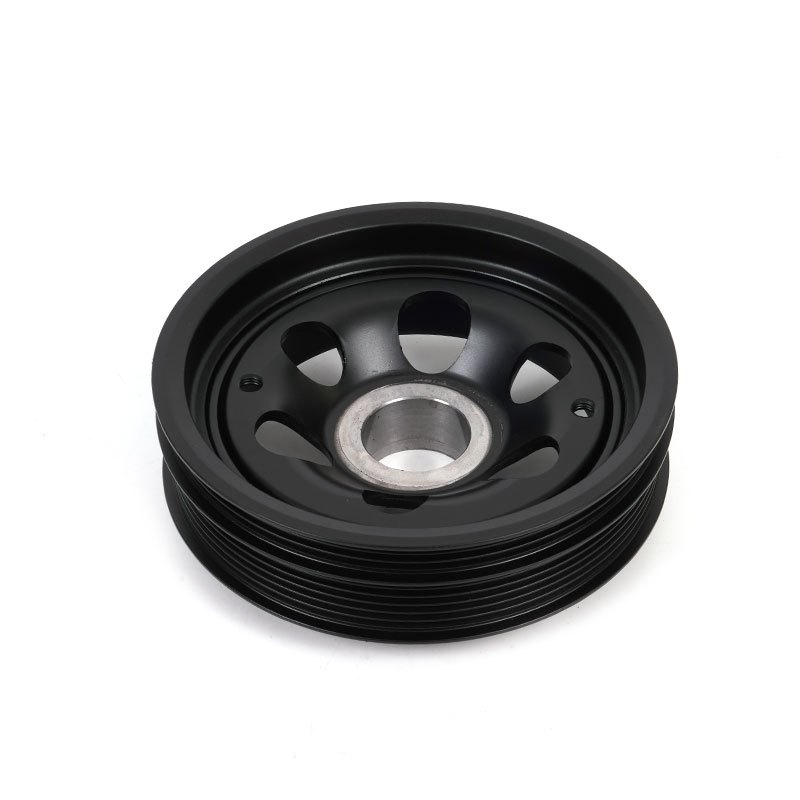
These are the most common type for on-highway diesel engines. They consist of a rubber ring bonded between a hub and an inertia ring. They are cost-effective and provide excellent damping at a specific frequency. However, they are sensitive to heat and age, which can cause the rubber to harden or de-bond. They are ideal for applications with a relatively stable operating RPM range.
Viscous (Silicone Fluid) Dampers
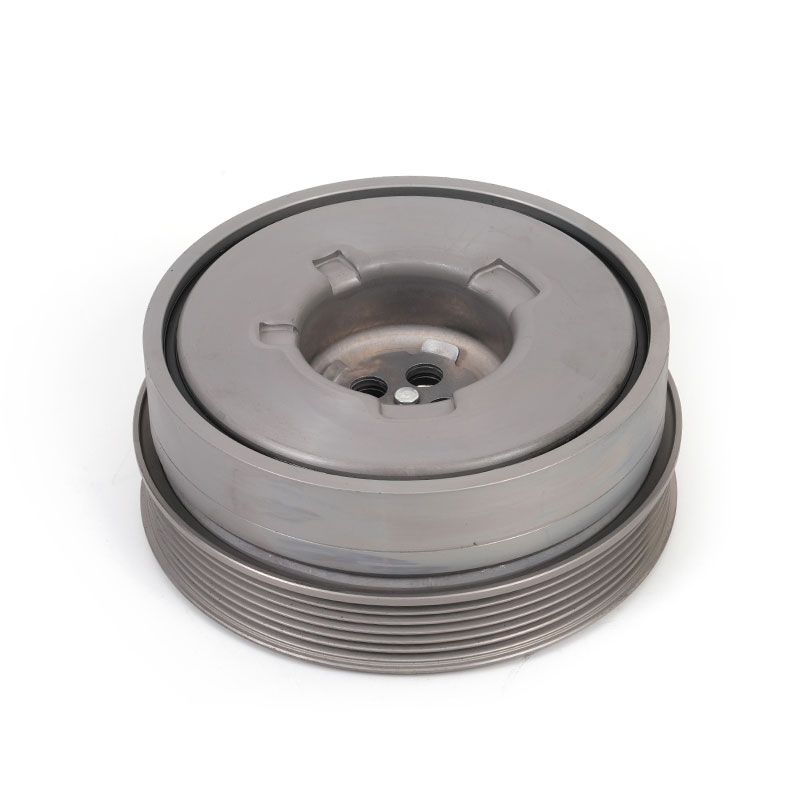
Viscous dampers are the preferred choice for extreme conditions. They feature an inertia ring encased in a housing filled with high-viscosity silicone fluid. The shearing action of the fluid dissipates torsional energy as heat across a broad frequency range. Their advantages include:
- Superior Thermal Stability: Silicone fluid maintains its damping properties even at high temperatures, making it ideal for heavy duty engine vibration damper applications.
- Broadband Damping: Effective across all engine orders and RPM ranges, which is critical for engines that see variable loads, such as marine or generator sets.
- High Reliability: No bonded rubber parts to fail, resulting in a longer operational life.
Application-Specific Considerations: Marine and Generator Engines
Selecting a marine engine vibration damper or a generator engine vibration damper introduces additional layers of complexity. These applications often require dampers that meet stringent classification society standards (like Lloyd’s Register or DNV) for safety and reliability.
Comparative Analysis of Damper Applications
| Application | Key Operating Challenge | Recommended Damper Type | Critical Requirement |
|---|---|---|---|
| Heavy-Duty Truck (Diesel) | Sustained highway speeds, high torque loads | Elastomer or Viscous | Long service life under steady heat load |
| Marine Propulsion | Variable RPM, continuous operation, high vibration orders | Viscous (Silicone Fluid) | Broadband damping, classification society certification |
| Generator (Standby/Primary) | Sudden load changes, constant 1500/1800 RPM | Viscous or High-Performance Elastomer | Precise tuning at governing speed, fail-safe design |
Why Partner with a Specialized Wholesaler and Manufacturer
Sourcing from a generic parts distributor often results in a one-size-fits-all solution that fails under rigorous conditions. Working directly with a specialized engine vibration damper manufacturer and wholesaler like AuraMaia provides distinct advantages. As a vibration damper factory China based company with global reach, we offer:
- Engineered Solutions: We don’t just sell parts; we analyze your engine parameters to provide a damper tuned for your specific model and application.
- OEM/ODM Capabilities: For engine rebuilders or OEMs, we offer customizable designs that match or exceed original equipment specifications. Our IATF 16949 certification ensures automotive-grade quality.
- Testing and Validation: Every damper we produce, whether for a 5-liter diesel or a 50-liter marine engine, undergoes rigorous validation in our in-house testing center, including fatigue testing and environmental simulation, ensuring reliability that a simple parts Supplier cannot guarantee.
By prioritizing application-specific engineering and quality manufacturing, you transform the vibration damper from a mere replacement part into a critical investment in your fleet’s or vessel’s operational reliability. Choosing the right automotive vibration damper supplier for your heavy-duty needs is a decision that directly impacts your bottom line through reduced downtime and extended engine life.
 English
  简体中文
简体中文  Español
  Français
  Deutsch
  العربية
  한국어
한국어  Русский
  Português
  Tiếng Việt
  Italiano
  Maithili
  ไทย
ไทย  Türkçe