
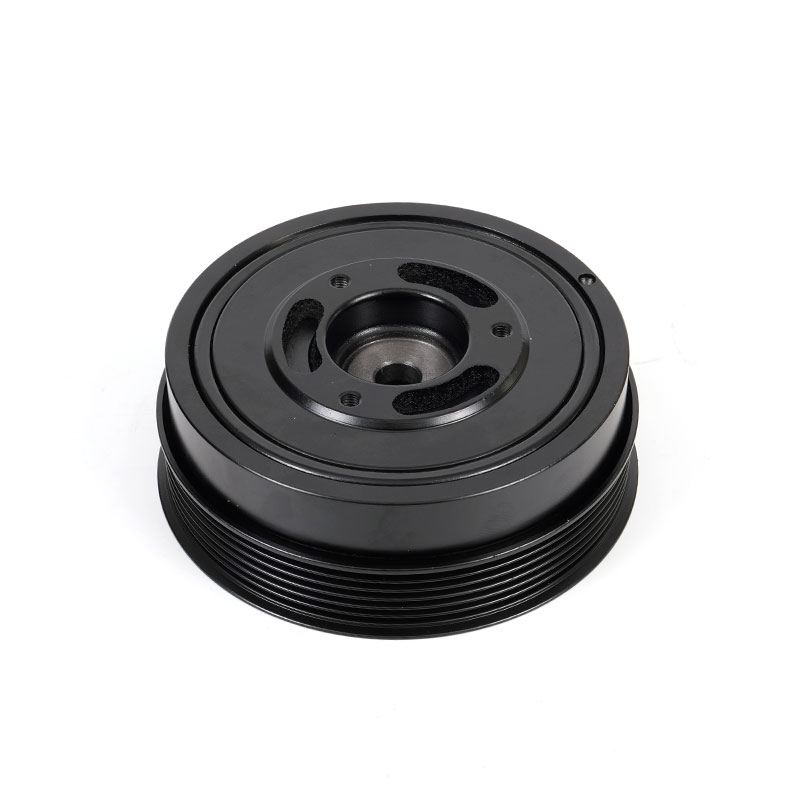
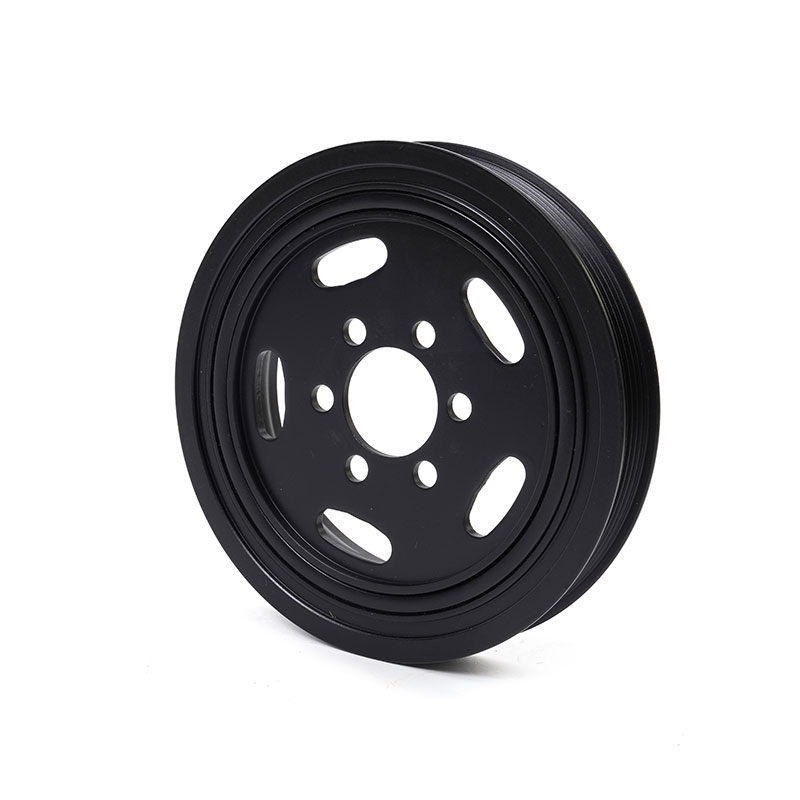
For power generation professionals, a fluid damper (also called a viscous damper or engine vibration damper) is as critical as the alternator or the fuel system. A generator engine runs at constant governed speed (typically 1500 or 1800 RPM) but faces unique stresses: sustained thermal load, sudden load transients, and extended idle periods during standby duty. Unlike a rubber harmonic damper pulley, a fluid viscous damper provides consistent broadband control without frequency‑specific tuning, making it the preferred choice for prime power and critical standby applications.
For prime power generators running 24/7, fluid viscous dampers should be replaced every 25,000 operating hours or during major overhauls. For standby generators with low hours, time‑based replacement at 8‑10 years is recommended, regardless of operating hours, due to seal aging and fluid polymerisation. A failed damper in a generator set can cause crankshaft failure during the moment the power is most needed.
Auramaia is a China‑based Manufacturer and Supplier of fluid dampers for generator sets, serving OEMs, rental fleets, and aftermarket distributors. Our Customizable OEM/ODM capabilities include severe‑duty thermal management, remote monitoring compatibility, and full documentation for export compliance.
Prime Power vs. Standby: Two Different Demands
Generator applications divide into two categories with distinctly different damper requirements:
- Prime power (continuous operation): These generators run unlimited hours annually with variable loads. The damper faces sustained thermal stress and continuous fluid shear. Vibratech TVD’s general guideline for stationary engines and gensets is 25,000 hours. For prime power, viscous dampers are strongly preferred over rubber due to their superior thermal stability.
- Standby generators (low hours, critical reliability): These units may operate only 50‑200 hours annually during weekly exercise runs, but they must perform instantly during an outage. Here, time‑based degradation (seal aging, fluid polymerisation) drives replacement regardless of hours. Industry practice recommends damper replacement every 8‑10 years for standby generators.
Deep Dive: Load Transients and Thermal Management
A generator experiences rapid load changes when large motors start or when the facility draws sudden power. Each load transient sends a torsional shock through the crankshaft. In a prime power application, these transients occur hundreds of times daily, creating a cumulative fatigue load on the damper. The energy dissipation equation P = μ × (Δω)² × V governs heat generation, where μ is fluid dynamic viscosity, Δω is angular velocity difference between housing and inertia ring, and V is fluid volume in the shear gap. For a typical 500 kW generator operating at 1800 RPM, the damper dissipates approximately 500‑800 watts of heat as power during sustained operation. If this heat cannot be dissipated efficiently, the silicone fluid temperature rises, accelerating polymerisation.
Advanced generator dampers use optimised housing geometry with cooling fins or enhanced surface area to radiate heat. For continuous‑duty applications, Auramaia engineers can specify housings with increased thermal mass and high‑grade silicone fluids with enhanced oxidation resistance. Additionally, remote damper monitoring—using temperature sensors connected to the generator’s SCADA system—allows operators to track thermal performance in real time. A sudden 15‑20°C temperature rise at constant load is a definitive indicator of fluid degradation, enabling predictive maintenance scheduling before catastrophic failure occurs.
Load Types and Their Impact on Damper Life
Not all generator loads are equal. Understanding the load profile helps predict damper wear:
- Motor starting (direct‑on‑line): Creates a torque transient of 600‑800% of rated torque, delivering a single large torsional shock. Soft‑start devices reduce this stress significantly.
- Block load (full facility load): Represents a sustained overload condition of 100‑150% of rated torque. Requires a damper with adequate thermal margin.
- Compressor cycling: Produces repetitive moderate shocks (200‑300% of rated torque). Viscous dampers handle these cycles better than rubber.
- UPS/rectifier load: Generates continuous harmonic distortion. Viscous dampers provide effective broadband control for these non‑sinusoidal loads.
Why Viscous Dampers Excel in Generator Applications
Rubber elastomer dampers are often inadequate for prime power because the sustained heat causes the rubber to harden within a few thousand hours. Once hardened, the damper loses effectiveness and may even transfer more vibration to the crankshaft. Viscous dampers, with their silicone fluid and metal‑to‑metal construction, maintain consistent performance across the full operating life. Many generator OEMs now specify viscous dampers as standard equipment for prime power ratings. Auramaia offers viscous dampers specifically engineered for generator duty, with enhanced seal durability for extended idle periods and corrosion‑resistant coatings for outdoor installations.
Installation and Maintenance for Generator Dampers
- During generator overhauls, always replace the damper. The labour is already accounted for, and the cost of a new damper is trivial compared to a crankshaft failure.
- Inspect the damper during every annual service. Look for fluid leaks, housing distortion, and excessive surface temperature.
- For prime power generators, consider fluid sampling. Large‑frame dampers with removable covers allow silicone analysis to determine remaining life.
- Store spare dampers in a climate‑controlled environment. Extreme heat accelerates seal aging; extreme cold is generally not a concern for silicone fluid.
FAQ: Generator Fluid Dampers
What is the replacement interval for a generator fluid damper?
For prime power (continuous operation), Vibratech TVD’s guideline is 25,000 hours. For standby generators (low hours, critical reliability), time‑based replacement at 8‑10 years is recommended, regardless of operating hours, due to seal aging and fluid polymerisation.
Can a fluid damper be used on a bi‑fuel generator?
Yes. However, different fuels (natural gas vs. diesel) have different combustion characteristics, affecting torsional excitation. Ensure your supplier validates the damper for your specific fuel type and mixture.
What happens if the silicone fluid leaks out?
Loss of fluid results in zero damping capacity, leading to immediate risk of crankshaft failure. The engine will exhibit severe vibration. Stop the generator immediately and replace the damper.
Do you offer private labelling for generator distributors?
Yes, as an OEM/ODM Manufacturer, we offer private labelling with your brand, custom packaging, and specific torque specifications printed on the unit for installer convenience.
Why are viscous dampers preferred over rubber for generator applications?
Viscous dampers offer superior thermal stability (up to 150°C vs. 100°C for rubber), broadband damping across all frequencies, and no bonded rubber to harden or crack. For continuous‑duty prime power, these advantages translate directly to longer engine life and reduced downtime.
Sources: Vibratech TVD – Heavy Duty Engine Damper Replacement & Remanufacturing Options (2017); Prime, Standby, and Continuous Generator Ratings (industry standards); Auramaia engineering data.


 English
  简体中文
简体中文  Español
  Français
  Deutsch
  العربية
  한국어
한국어  Русский
  Português
  Tiếng Việt
  Italiano
  Maithili
  ไทย
ไทย  Türkçe